
Power-Frequency UPS
Industrial-frequency topology with transformer-isolated output — the right choice when the grid is hostile and downtime is unacceptable.
Where power-frequency wins
Power-frequency (transformer-based) UPS systems trade some efficiency for absolute robustness: the isolation transformer at the output tolerates overload, short circuits and harsh load characteristics that would trip high-frequency designs. That is why power plants, substations, steel mills and mining operations still specify them.
HighIdea GX-series industrial UPS covers 6kVA to 600kVA with:
- Isolation-transformer output for galvanic separation
- High overload and short-circuit capability
- Wide input voltage and frequency windows for generator co-operation
- Lightning protection and anti-interference design for electric-power environments
Versions are available for 220/230/240Vac and 100/110/120Vac sites. For high-frequency three-phase alternatives, see Three-Phase Online UPS.
Available models1 series
| Model | Type | Typical applications | Notes |
|---|---|---|---|
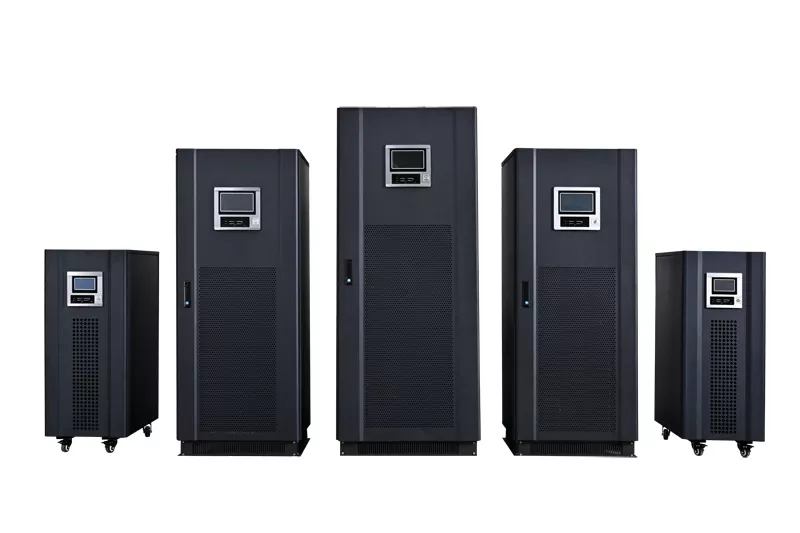 GX(A) / GX33 Series |
Industrial-frequency online UPS (transformer-isolated) | Power plants, substations, steel, mining, chemical plants | HV (220–240V) and LV (100–120V) output versions |
Models with links have detailed specification pages; unlisted models are also available on request. Capacity and quantity should be sized by our engineers against the actual load — never by nameplate rating alone.
Power-Frequency UPS — frequently asked questions
What capacity range is available?
Why choose power-frequency (transformer-isolated) instead of high-frequency?
What loads are these used on?
Other Industrial UPS categories
Compare the alternatives within the same product line.