
12 V LiFePO4 Battery Packs (12.8 V)
A 12 V LiFePO4 pack weighs roughly a third of the equivalent lead-acid bank and gives you the full rated capacity instead of half of it — provided the charge profile is set correctly.
Why 12 V packs are the most common drop-in replacement
A 12.8 V nominal LiFePO4 pack sits inside the voltage window most 12 V equipment already expects: 10 V to 14.6 V. That makes it the one chemistry you can usually substitute into an existing system without changing the inverter or the alternator.
The gain is not only weight. Lead-acid is normally sized at 50 % depth of discharge to reach its rated cycle life, so a "100 Ah" lead-acid bank is effectively a 50 Ah bank. A LiFePO4 pack is specified at 80–90 % depth of discharge, so a 100 Ah LiFePO4 pack delivers close to 80–90 Ah of usable energy.
| What changes | Lead-acid | LiFePO4 |
|---|---|---|
| Usable capacity | ~50 % of rating | 80–90 % of rating |
| Weight for the same usable energy | baseline | roughly one third |
| Cycle life at that depth | 300–500 cycles | 3,000–6,000 cycles |
| Maintenance | terminal and water checks | none |
What must be verified before substituting
Do not simply swap the battery. Three things decide whether the upgrade works:
- Charge voltage. LiFePO4 needs 14.2–14.6 V absorption and no float above 13.8 V. An old lead-acid charger pushing 14.8 V or a desulfation pulse will shorten cell life. Check the charger or solar controller has a LiFePO4 profile.
- Low-temperature charging. Charging below 0 °C damages LiFePO4 cells. For cold-climate use, specify a pack with a low-temperature cut-off or an internal heater.
- Continuous current. The BMS rating, not the cell rating, sets what the pack can deliver. A 100 Ah pack with a 100 A BMS is fine for a 1,000 W inverter; a 2,000 W inverter needs a 150 A or 200 A BMS.
How we build them
Cells are capacity- and resistance-graded before assembly, laser-welded to a nickel busbar sized for the rated continuous current, then fitted with a smart BMS that reports cell voltages, temperature and state of charge over Bluetooth, RS485 or CAN. Every pack is charged and discharged at 0.5C before it leaves the line, and the test log is filed against the serial number.
Enclosure options run from a standard ABS case in the common group sizes through to a steel case with an IP65 seal for marine and vehicle mounting. Terminals, connector type, LCD or no LCD, and the BMS communication protocol are all order-line choices, not engineering changes.
Available models2 series
| Model | Type | Typical applications | Notes |
|---|---|---|---|
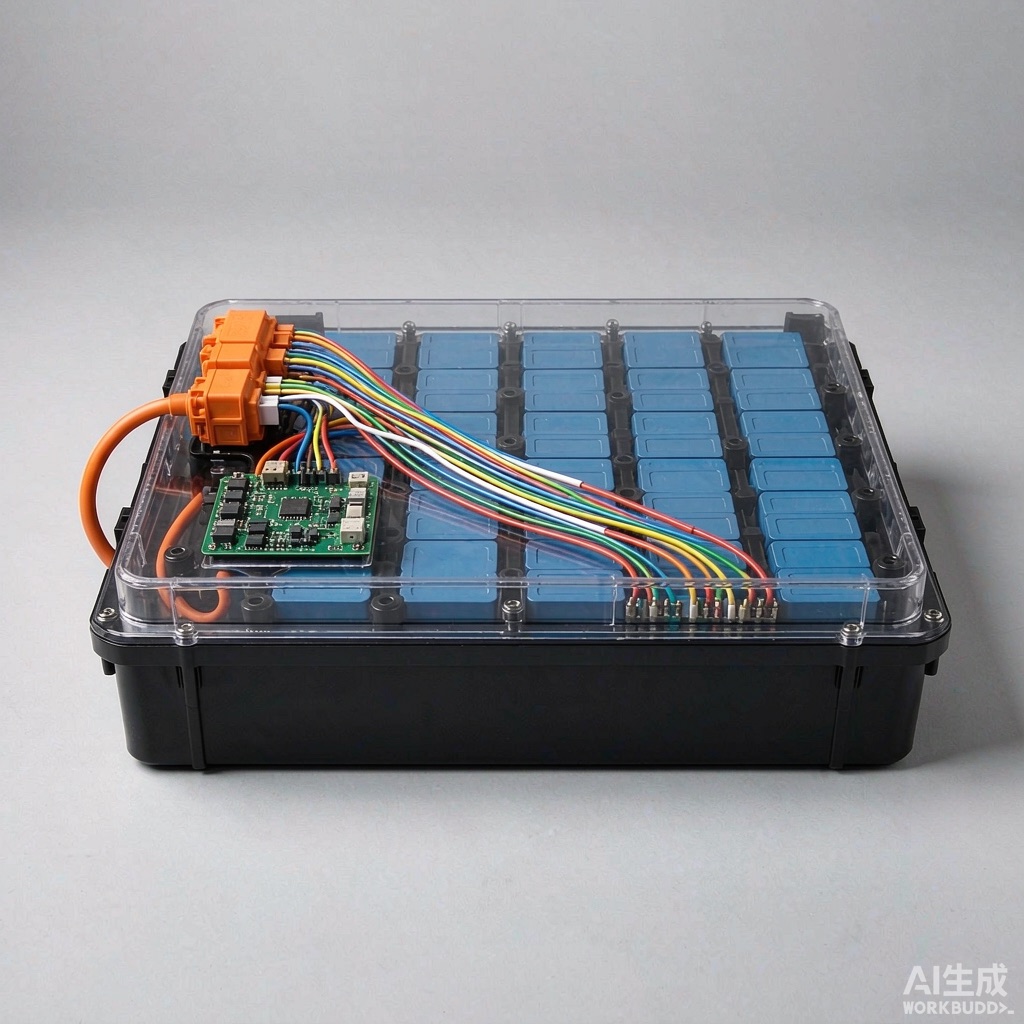 LP12-100 LP12-100
|
12.8 V LiFePO4 pack, 4S BMS | RV, marine, off-grid cabinets, golf carts, solar backup | Standard ABS case, M8 terminals, Bluetooth monitoring |
|
LP12-200
|
12.8 V LiFePO4 pack, 4S high-current BMS | Large off-grid banks, 2–3 kW inverters, marine house banks, mobile offices | Requires a charger capable of at least 50 A for reasonable recharge times |
Models with links have detailed specification pages; unlisted models are also available on request. Capacity and quantity should be sized by our engineers against the actual load — never by nameplate rating alone.
Other Battery Packs categories
Compare the alternatives within the same product line.
48 V LiFePO4 Battery Packs
LD48V rack packs (10–60 Ah) and the LP48 platform (100–280 Ah), 51.2 V nominal with built-in 16S BMS and CAN/RS485 inverter communication.
View details24 V LiFePO4 Battery Packs
8S configuration for 24 V inverters, mobility equipment and light industrial drive systems.
View detailsHigh-Voltage Battery Packs
100 V to 800 V series stacks with a master-slave BMS — for commercial inverters, traction and containerised storage.
View detailsVRLA Batteries
NP-series 12V valve-regulated lead-acid batteries, 7–250Ah, for UPS and standby power.
View details