
Battery Management Systems (BMS)
The BMS is the component that decides whether a pack reaches its rated cycle life. Chosen well, it is invisible. Chosen badly, it is the reason for every warranty claim you will process.
What a BMS actually has to do
A BMS is not just a protection switch. It performs five functions, and a pack can fail on any of them:
| Function | What it protects | Failure mode if wrong |
|---|---|---|
| Cell over/under-voltage cut-off | Cells from damage | Cells drift, capacity falls, pack fails early |
| Over-current and short circuit | Cells, wiring, the load | Contactors weld, or nuisance tripping |
| Temperature protection | Cells from thermal runaway | Accelerated ageing, or a safety event |
| Cell balancing | Long-term capacity consistency | The weakest cell ends the pack's life first |
| State estimation and reporting | The system controller | Inverter mis-reports SOC, system shuts down |
Passive or active balancing
Passive balancing burns off charge from the highest cell through a resistor. It is cheap, reliable and adequate when cells are well matched and the pack is cycled gently.
Active balancing moves charge between cells. It is faster and wastes less energy, and it matters when cells are cycled hard, when the pack operates at high temperature, or when the required service life is long and tolerance drift is expected.
Our standard boards use passive balancing at 30–50 mA for cost-sensitive builds, and active balancing above 1 A for commercial and industrial systems.
Choosing the current rating
Match the BMS continuous rating to the application's continuous current with headroom for the peak — typically 1.3 to 1.5 times the continuous figure. Under-rating produces nuisance trips on start-up; over-rating removes protection from the wiring, which is worse.
A 100 A BMS pair with 16 mm² cable is a common mismatch: the cable is fine at 100 A but the BMS will let 100 A flow through a cable sized for less, so the cable must be specified on the BMS rating, not the load.
Communication
Every board we supply reports cell voltages, temperatures, SOC, SOH, cycle count and alarms over an interface. Bluetooth is standard for monitoring apps; RS485 and CAN are standard for inverter and EMS integration. We load the protocol the inverter expects at the factory — tell us the make and model when you order.
Available models1 series
| Model | Type | Typical applications | Notes |
|---|---|---|---|
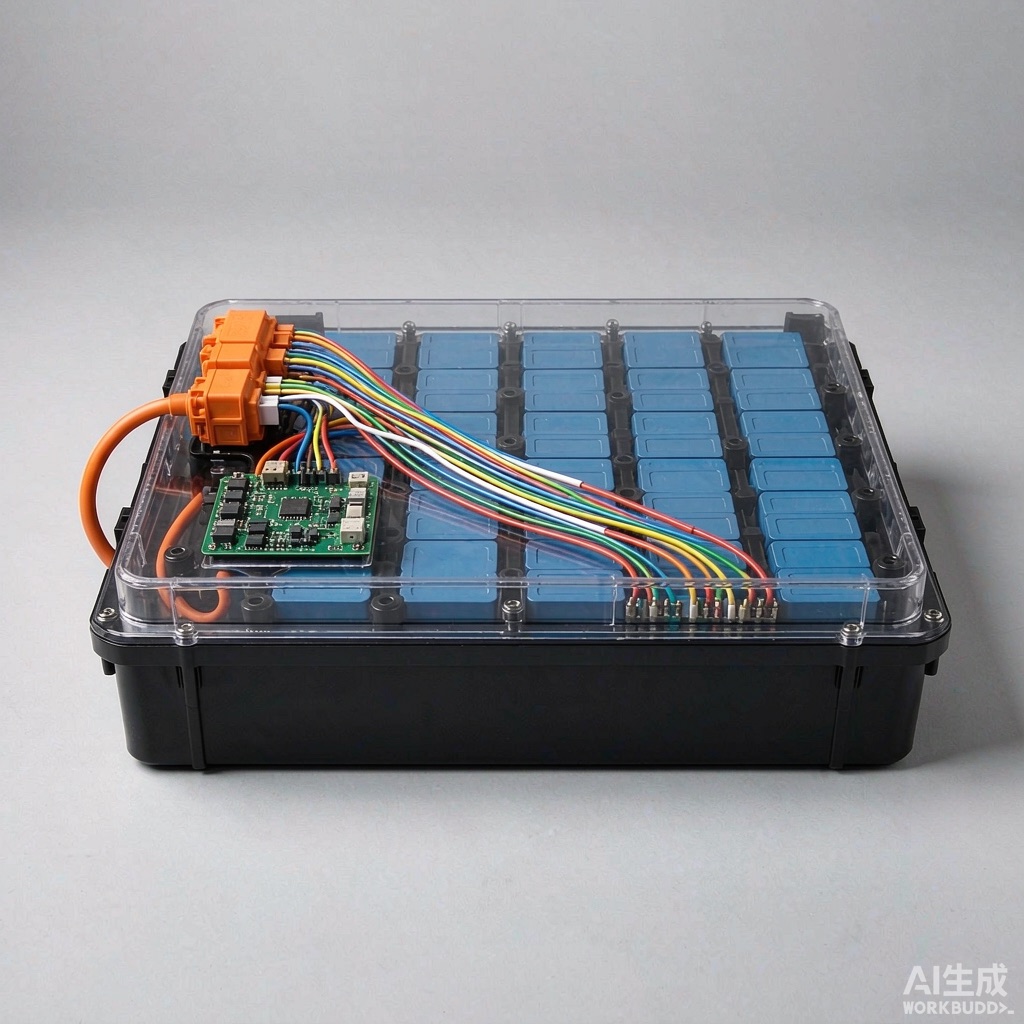 BMS-16S-100A BMS-16S-100A
|
Smart BMS, 16S, 100 A | 51.2 V LiFePO4 packs, telecom, solar, UPS replacement | Supplied as a spare or integrated with a pack order |
Models with links have detailed specification pages; unlisted models are also available on request. Capacity and quantity should be sized by our engineers against the actual load — never by nameplate rating alone.
Other Accessories & BMS categories
Compare the alternatives within the same product line.