
Commercial & Industrial Battery Storage
At commercial scale the battery is the cheap part. What decides the project is thermal design, fire protection, grid-code compliance and whether the system can be serviced in ten years by someone who is not the original installer.
What a commercial project actually requires
A residential system is a product. A commercial system is an installation with a safety case. Before a price is meaningful, five things have to be defined:
- The application. Peak shaving, demand charge reduction, solar self-consumption, backup, or a combination. Each drives a different power-to-energy ratio.
- The electrical interface. Connection voltage, transformer capacity, whether the site can export, and the protection coordination with the existing switchgear.
- Thermal strategy. Air cooling is adequate for moderate duty cycles and mild climates. Liquid cooling costs more and holds cell temperature variation tighter, which extends life in hot or high-duty installations.
- Fire safety. Detection, suppression and, in many jurisdictions, deflagration venting. This is a code requirement, not an option.
- Grid code and metering. What the local network operator requires for the connection, and how the system will be metered for whatever revenue mechanism is being claimed.
Air-cooled cabinet or liquid-cooled container
| 100–215 kWh cabinet | Containerised BESS | |
|---|---|---|
| Footprint | Small, indoor or outdoor | 20 ft / 40 ft, outdoor |
| Cooling | Air, or liquid on request | Liquid, integrated |
| Typical use | Behind-the-meter C&I | Utility-scale and large industrial |
| Installation | Crane or forklift, short cabling | Civil works, transformer, HV connection |
| Serviceability | Front access modules | Walk-in or rack access |
For most behind-the-meter industrial sites, a 100–215 kWh cabinet is the right first step: it fits existing switchgear, needs no civil works, and can be expanded later by adding cabinets in parallel.
How we work on a commercial project
We quote from a site requirement rather than a stock list. Send the load profile and interval data if you have it, the connection details, the target application and the ambient conditions. We return a system layout, an energy and power sizing calculation, a single-line diagram and a price.
For containerised projects we also provide the transport and lifting documentation, the commissioning procedure and the maintenance schedule, because those are what the site operator needs after handover.
Available models4 series
| Model | Type | Typical applications | Notes |
|---|---|---|---|
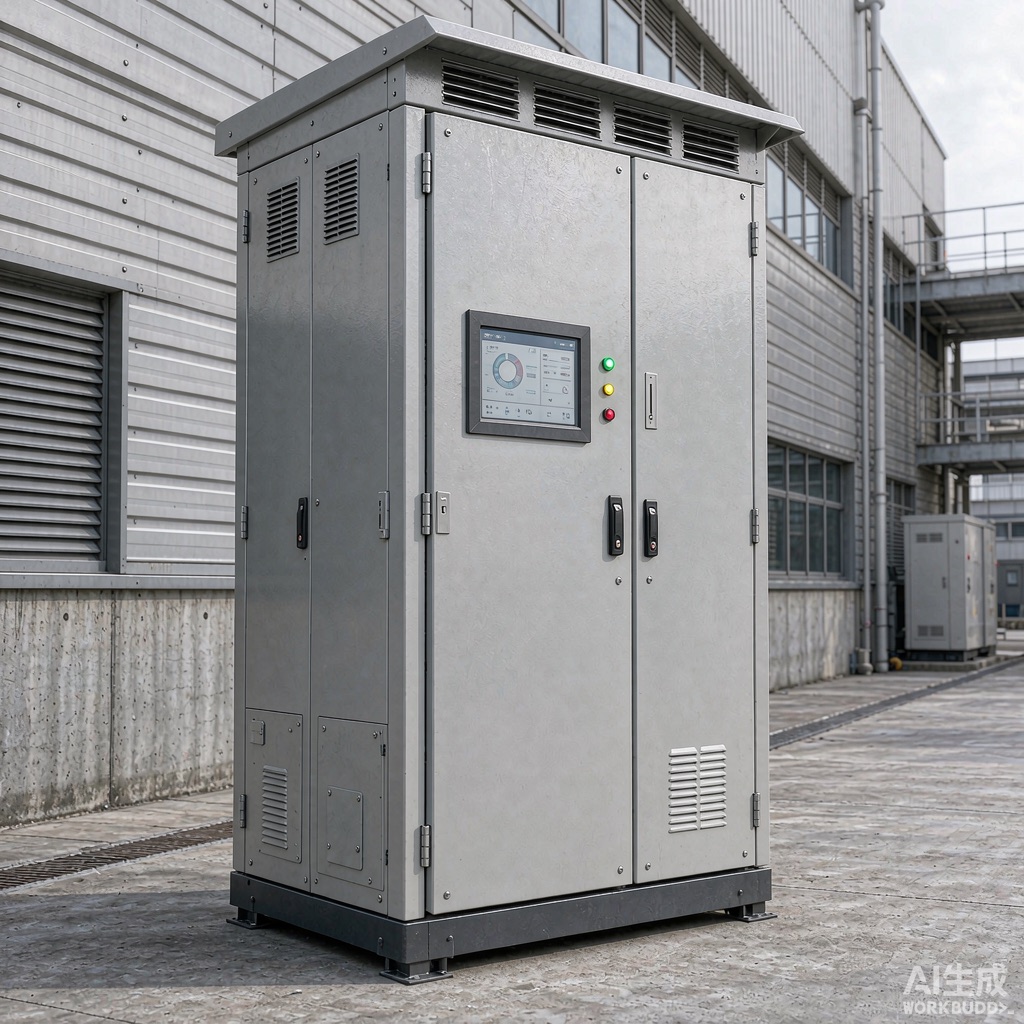 CI-100 CI-100
|
Air-cooled commercial BESS cabinet | Behind-the-meter peak shaving, demand charge reduction, solar shifting | Expandable by paralleling cabinets on the AC side |
|
CI-215
|
Liquid-cooled commercial BESS cabinet | High-duty industrial storage, hot climates, solar shifting, peak shaving | Cell temperature spread held within 3 °C across the cabinet |
|
CI-1000
|
Containerised BESS, 20 ft | Utility-scale storage, large industrial peak shaving, renewable shifting | Also available as a battery-only container without PCS |
| Containerised BESS (custom) | ODM system | Utility and industrial storage | 20 ft / 40 ft |
Models with links have detailed specification pages; unlisted models are also available on request. Capacity and quantity should be sized by our engineers against the actual load — never by nameplate rating alone.
Other Energy Storage Systems categories
Compare the alternatives within the same product line.
Residential Energy Storage
Wall-mount and stackable 5–30 kWh battery systems with low-voltage or high-voltage output.
View detailsRack & Cabinet Systems
19-inch rack modules and pre-wired cabinets for integrators who build their own enclosure and EMS.
View detailsPortable & Mobile Storage
Wheeled and portable systems for events, field work and temporary power, with AC output and solar input.
View details