
Residential Battery Energy Storage Systems
A home battery is a long-term purchase that has to fit a wall, talk to an inverter, and survive a decade in an unheated garage. The specification that matters is rarely the kWh figure on the brochure.
The number that actually matters: usable kWh
A "10 kWh" home battery rarely delivers 10 kWh to the house. Usable energy depends on the depth of discharge the manufacturer allows, the round-trip efficiency of the pack and inverter, and the temperature in the room it is installed in.
For a cold garage in a northern market, a pack that is rated for -10 °C discharge but has no heater will deliver noticeably less in January than in July. If your market includes cold climates, specify heating and be explicit about it in the datasheet — a customer who discovers a winter shortfall will not stay a customer.
Low-voltage or high-voltage
Two architectures dominate, and the choice is usually set by the inverter rather than the battery.
| Low voltage (48 V) | High voltage (100–400 V) | |
|---|---|---|
| Inverter pairing | Widely available, cheaper | Specific models, higher cost |
| Cable and current | Thick cables, high current | Thin cables, low current |
| Expandability | Add a parallel module | Add a series module |
| Best for | Retrofit and budget builds | New installations, larger systems |
| Certification effort | Lower | Higher |
Low-voltage systems are easier to certify and to expand in the field, which is why most white-label residential products in the 5–15 kWh band use 48 V. High-voltage systems win where the run between battery and inverter is long or the inverter is already high-voltage.
What we handle in an OEM build
For brand owners we deliver a complete product: enclosure design and tooling, BMS selection and firmware, inverter protocol matching, a datasheet with tested figures, and the certification documentation the market requires. Cell and module production stays in our plant, so your specification is not dependent on a third-party assembler.
Standard platforms start at 5 kWh wall-mount and 10 kWh stackable. Above 30 kWh we move to the commercial cabinet platform.
Available models4 series
| Model | Type | Typical applications | Notes |
|---|---|---|---|
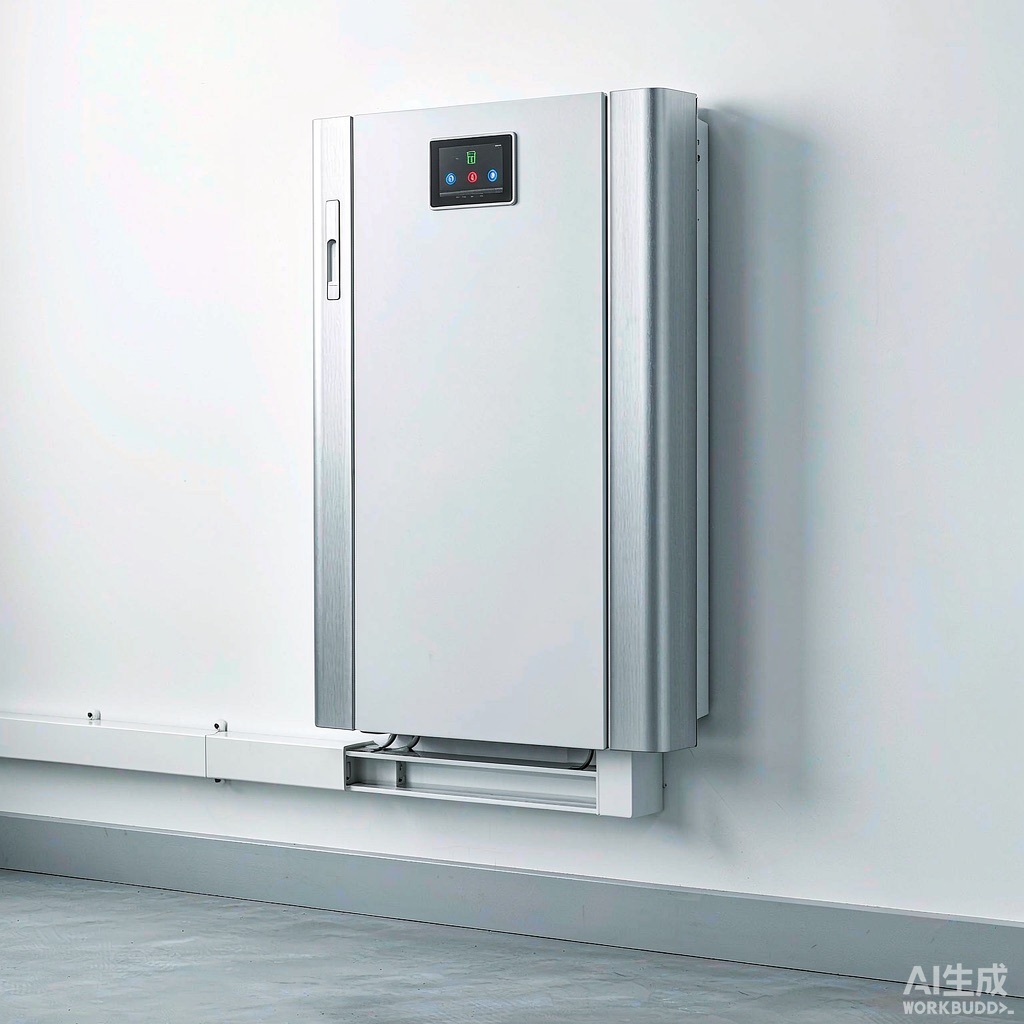 HE-5 HE-5
|
51.2 V residential ESS module | Single-inverter home storage, retrofit with an existing hybrid inverter | Expand by paralleling; up to 6 units for 30.7 kWh |
|
HE-10
|
51.2 V residential ESS, two-module stack | Households with heat pump or EV, larger daily cycling | Modules are individually replaceable without removing the stack |
|
HE-15
|
51.2 V residential ESS, three-module stack | Large households, heat pump plus EV, backup requirement | Same module as the 5 and 10 kWh stacks — spares remain available across the range |
| Stackable battery module (custom) | Modular battery | Residential retrofit | Parallel up to 16 modules |
Models with links have detailed specification pages; unlisted models are also available on request. Capacity and quantity should be sized by our engineers against the actual load — never by nameplate rating alone.
Other Energy Storage Systems categories
Compare the alternatives within the same product line.
Commercial & Industrial Storage
100 kWh to multi-MWh cabinets and containers for peak shaving, demand charge reduction and backup.
View detailsRack & Cabinet Systems
19-inch rack modules and pre-wired cabinets for integrators who build their own enclosure and EMS.
View detailsPortable & Mobile Storage
Wheeled and portable systems for events, field work and temporary power, with AC output and solar input.
View details