
High-Voltage LiFePO4 Battery Packs (100 V – 800 V)
Above 100 V, a battery stops being a component and becomes a system: master-slave BMS, pre-charge, insulation monitoring and a fuse arrangement that has to be designed, not bought off a shelf.
What changes above 100 V
A low-voltage pack is a self-contained product. A high-voltage stack is an engineering project with electrical, thermal and safety design that must be documented for the certification body and, in many markets, for the installer.
The four additions that matter:
- Master-slave BMS. Each series module carries a slave board measuring its own cells and temperature; a master unit aggregates the stack, calculates state of charge and state of health, and controls the contactors.
- Pre-charge circuit. The inverter's DC-link capacitance looks like a short circuit at the instant of connection. Without a pre-charge resistor and correctly sequenced contactors, the inrush will weld a contactor or trip the fuse.
- Insulation monitoring. Above the low-voltage threshold, an insulation fault to earth is a hazard rather than an inconvenience. The BMS must measure isolation resistance and open the contactors when it degrades.
- Service disconnect and fusing. The stack needs a documented, lockable isolation point and protection coordinated with the inverter's own DC protection.
Typical configurations
Our standard high-voltage platforms are built around a 51.2 V module as the repeatable unit — the same module used in our 48 V and rack products. Stacking 5, 8, 10 or 16 modules gives 256 V, 410 V, 512 V or 819 V nominal, which covers most commercial three-phase inverters and containerised systems.
| Platform | Nominal | Modules | Typical application |
|---|---|---|---|
| LP-HV-256 | 256 V | 5 × 51.2 V | Three-phase commercial inverter |
| LP-HV-410 | 410 V | 8 × 51.2 V | Industrial UPS and off-grid |
| LP-HV-512 | 512 V | 10 × 51.2 V | Container ESS, traction |
| Custom | up to 819 V | 16 × 51.2 V | To specification |
What we need from you to quote
High-voltage work is quoted from a requirement, not from a catalogue. Send the DC voltage window the inverter accepts, the continuous and peak power, the maximum charge and discharge current, the ambient temperature range, the installation space and the certification target. We return a single-line diagram, a module layout and a price for approval before anything is built.
On most projects this takes one exchange of documents. Where the customer already has an inverter and a grid-code requirement, we start from the inverter's DC specification and work backwards to the stack.
Available models2 series
| Model | Type | Typical applications | Notes |
|---|---|---|---|
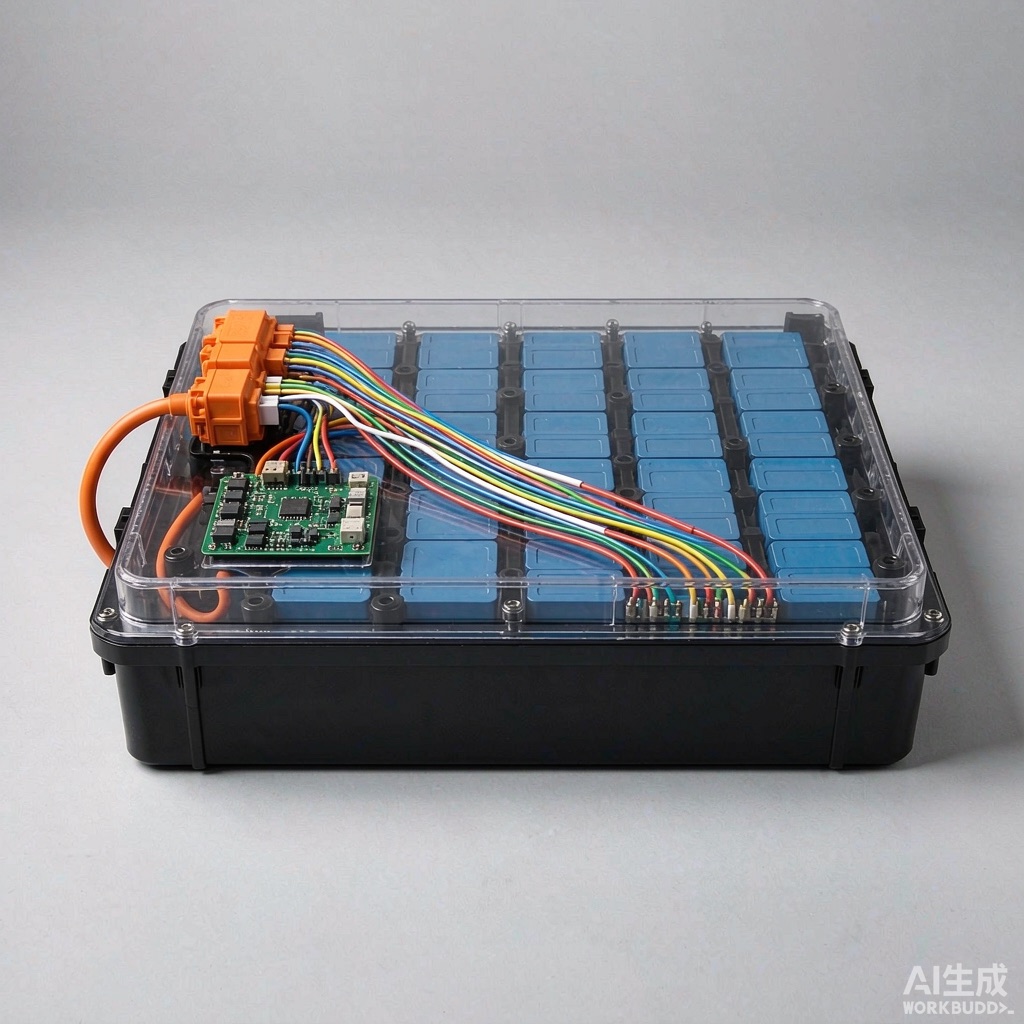 LP-HV-256 LP-HV-256
|
High-voltage LiFePO4 stack, 5S module | Three-phase commercial inverters, industrial UPS, off-grid estates | Supplied with master-slave BMS, pre-charge and insulation monitoring as standard |
|
LP-HV-512
|
High-voltage LiFePO4 stack, 10S module | Container ESS, large commercial inverters, traction, industrial DC systems | Also available at 410 V (8 modules) and 819 V (16 modules) |
Models with links have detailed specification pages; unlisted models are also available on request. Capacity and quantity should be sized by our engineers against the actual load — never by nameplate rating alone.
Other Battery Packs categories
Compare the alternatives within the same product line.
48 V LiFePO4 Battery Packs
LD48V rack packs (10–60 Ah) and the LP48 platform (100–280 Ah), 51.2 V nominal with built-in 16S BMS and CAN/RS485 inverter communication.
View details12 V LiFePO4 Battery Packs
Four cells in series with a 4S BMS. The drop-in upgrade for lead-acid in RVs, marine, golf carts and off-grid cabinets.
View details24 V LiFePO4 Battery Packs
8S configuration for 24 V inverters, mobility equipment and light industrial drive systems.
View detailsVRLA Batteries
NP-series 12V valve-regulated lead-acid batteries, 7–250Ah, for UPS and standby power.
View details