
LP-HV-512 high voltage LiFePO4 battery stack
51.2 kWh at 512 V from ten standard modules — the platform for containerised storage and large commercial inverters where the DC bus is high voltage by design.
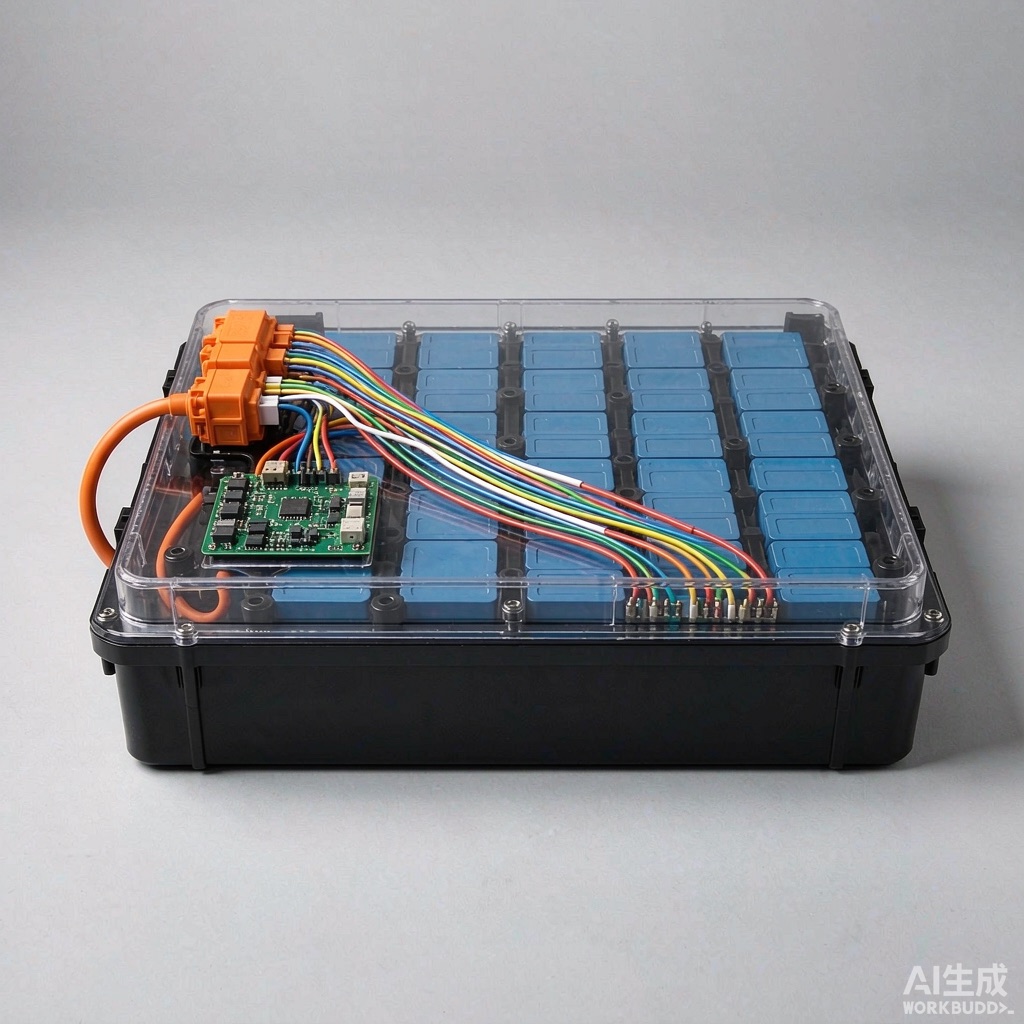 Product image
- Brand
- HighIdea
- Type
- High-voltage LiFePO4 stack, 10S module
- Typical applications
- Container ESS, large commercial inverters, traction, industrial DC systems
- Models in range
- LP-HV-410 eight-module, 41 kWh, LP-HV-512 ten-module, 51.2 kWh, LP-HV-819 sixteen-module, 82 kWh
- Category
- Battery Packs
Series for voltage, parallel for capacity
This is the architecture rule that governs every high-voltage project, and getting it wrong is expensive. The number of series modules sets the DC voltage and is fixed by the inverter or PCS input window. Capacity is added by paralleling complete stacks, never by extending a stack.
That means the DC voltage decision is made once, at design stage, and everything afterwards scales by duplicating a known-good string.
Documentation is part of the deliverable
On a container project the electrical documentation is as much of the product as the battery. Every stack ships with a single-line diagram, an installation and commissioning procedure, a service disconnect procedure and the module-level test logs. In most markets those documents are what the authority inspects, and a project that cannot produce them does not energise.
Key Features
- 512 V nominal from ten 51.2 V modules in series
- 51.2 kWh rated energy per stack
- Master-slave BMS with one slave per module and one master per stack
- Integrated pre-charge and sequenced main contactor
- Insulation monitoring with automatic contactor trip
- 100 A continuous, 200 A peak — about 51 kW continuous at nominal voltage
- Parallel stacks for capacity, not series extension
Specifications
| Nominal voltage | 512 V (10 × 51.2 V) |
|---|---|
| Rated energy | 51.2 kWh |
| Usable energy | approximately 46 kWh at 90 % depth of discharge |
| Continuous discharge current | 100 A (approximately 51 kW) |
| Peak discharge current | 200 A for 10 s |
| Continuous charge current | 50 A per stack |
| BMS architecture | master-slave |
| Communication | CAN to PCS or inverter |
| Protection | over/under-voltage |
| Pre-charge | integrated |
| Enclosure | steel rack cabinet |
| Mass | approximately 620 kg including cabinet |
Specifications subject to the latest factory data. Final configuration is sized against the actual load, backup runtime and site power conditions — this table is for pre-selection only.
Applications
Containerised commercial storage
Multiple stacks in parallel inside a 20 ft container with a PCS, providing the DC side of a 250 kW / 500 kWh system.
Large commercial inverter
Matches inverters specified with a 480–600 V DC window and a single CAN interface for the whole battery.
Traction and heavy vehicle
Where a high-voltage DC bus is already present and weight distribution across the chassis is a design constraint.
FAQ
How many stacks can be paralleled?
What happens if one module fails in the middle of a series string?
Is 51.2 kWh per stack a hard limit?
Do you provide the PCS?
Related Models
CI-1000
A 20 ft container holding 1 MWh of LiFePO4 with a 500 kW PCS, liquid cooling and integrated fire protection — supplied with the documentation that the fire authority and network operator will ask for.
View detailsCI-215
215 kWh / 100 kW with liquid cooling — for sites running two cycles a day in a hot climate, where air cooling would leave the cells working at a temperature that costs years of life.
View detailsLP-HV-256
A 256 V stack built from five of our standard 51.2 V modules, with the master-slave BMS and pre-charge arrangement that high-voltage systems require and low-voltage packs do not.
View details