
CI-100 commercial battery cabinet (100 kWh)
A 100 kWh / 50 kW cabinet for behind-the-meter peak shaving and demand charge reduction — sized to connect to an existing low-voltage switchboard without civil works.
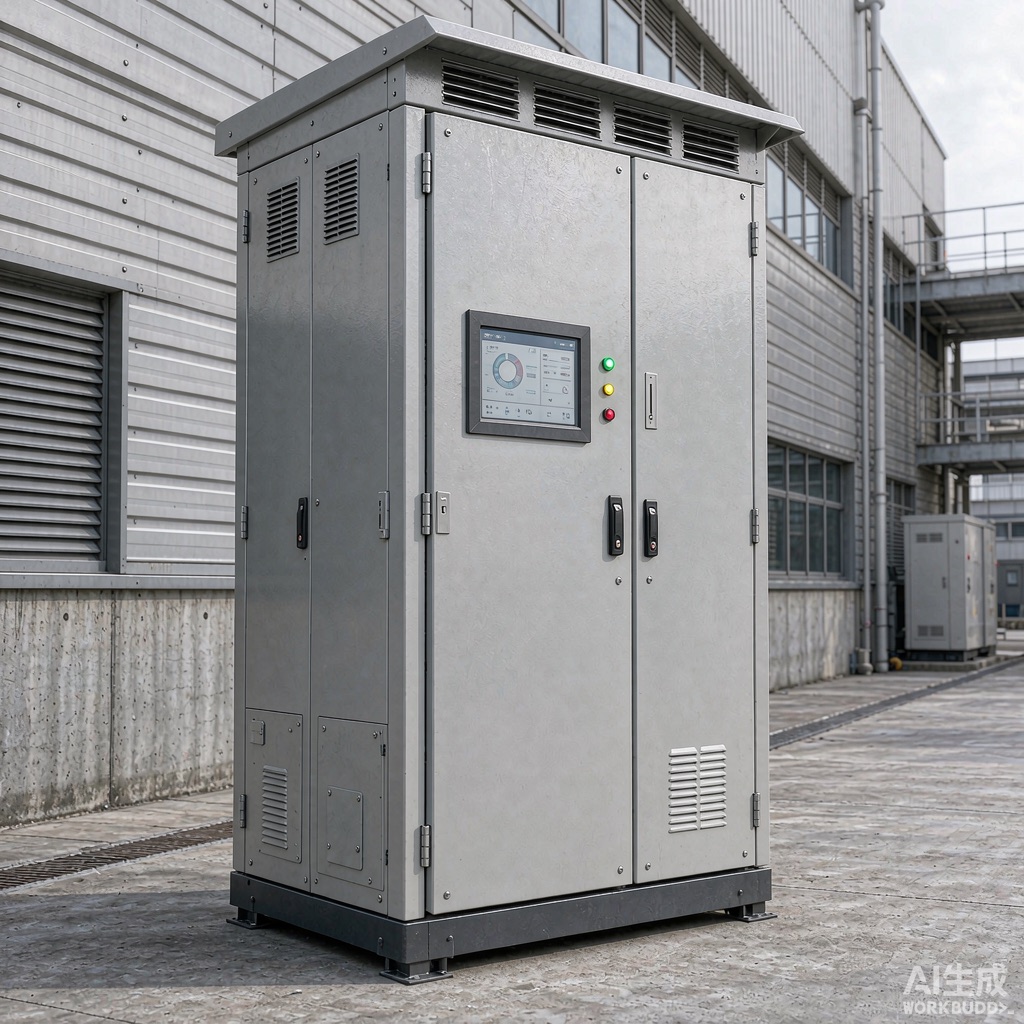 Product image
- Brand
- HighIdea
- Type
- Air-cooled commercial BESS cabinet
- Typical applications
- Behind-the-meter peak shaving, demand charge reduction, solar shifting
- Models in range
- CI-100 100 kWh / 50 kW, CI-100L liquid-cooled variant, CI-215 215 kWh / 100 kW
- Category
- Energy Storage Systems
Sizing from interval data, not from a capacity request
The most reliable way to size commercial storage is from the site's half-hourly meter data. That shows three things a capacity request cannot: the actual peak demand, how long the peaks last, and how many times a day they occur.
A site with a short, high peak needs high power and modest energy — a very different machine from a site with a long, moderate load that needs energy for shifting. Both might be casually described as "about 100 kWh".
What the installation involves
Mechanically it is simple: a concrete pad, an outdoor cabinet and a cable route to the switchboard. Electrically it is a modification to an existing installation, which means an isolation procedure, protection coordination with the existing switchgear, and in almost all markets an approval from the network operator before energisation.
We supply the single-line diagram, the protection settings, the commissioning procedure and the test records. The installation itself is carried out by a licensed electrical contractor, and we will work directly with them on the interface.
Key Features
- 100 kWh rated energy, approximately 90 kWh usable
- 50 kW rated power, 75 kW peak for 10 s
- Air cooled with filtered ventilation and temperature-controlled fans
- Integrated fire detection and aerosol suppression
- EMS with demand limiting, time-of-use scheduling and remote monitoring
- Connectable to an existing low-voltage switchboard
- Outdoor-rated enclosure requiring a concrete pad only
Specifications
| Rated energy | 100 kWh (approximately 90 kWh usable) |
|---|---|
| Rated power | 50 kW continuous |
| DC voltage | 512–800 V |
| Cooling | air cooled |
| Operating temperature | -20 °C to +50 °C |
| Fire protection | smoke and heat detection |
| Communication | Modbus TCP |
| Enclosure | steel |
| Dimensions | 1 |
| Mass | approximately 1 |
| Warranty | 10 years or stated throughput |
Specifications subject to the latest factory data. Final configuration is sized against the actual load, backup runtime and site power conditions — this table is for pre-selection only.
Applications
Demand charge reduction
Cuts peak demand charges by shaving the peaks caused by motor starts and equipment cycling at a manufacturing or cold-storage site.
Solar self-consumption
Stores surplus generation from an existing rooftop array and discharges into the evening load rather than exporting at a low tariff.
Backup for critical processes
With a suitable PCS, rides through short grid disturbances and protects processes where an interruption means scrapped product.
FAQ
How do I know what size cabinet I need?
What is the difference between air and liquid cooling?
What does the fire protection need to include?
Who does the grid connection?
Related Models
CI-215
215 kWh / 100 kW with liquid cooling — for sites running two cycles a day in a hot climate, where air cooling would leave the cells working at a temperature that costs years of life.
View detailsLP-HV-512
51.2 kWh at 512 V from ten standard modules — the platform for containerised storage and large commercial inverters where the DC bus is high voltage by design.
View details