
CI-215 liquid-cooled battery cabinet (215 kWh)
215 kWh / 100 kW with liquid cooling — for sites running two cycles a day in a hot climate, where air cooling would leave the cells working at a temperature that costs years of life.
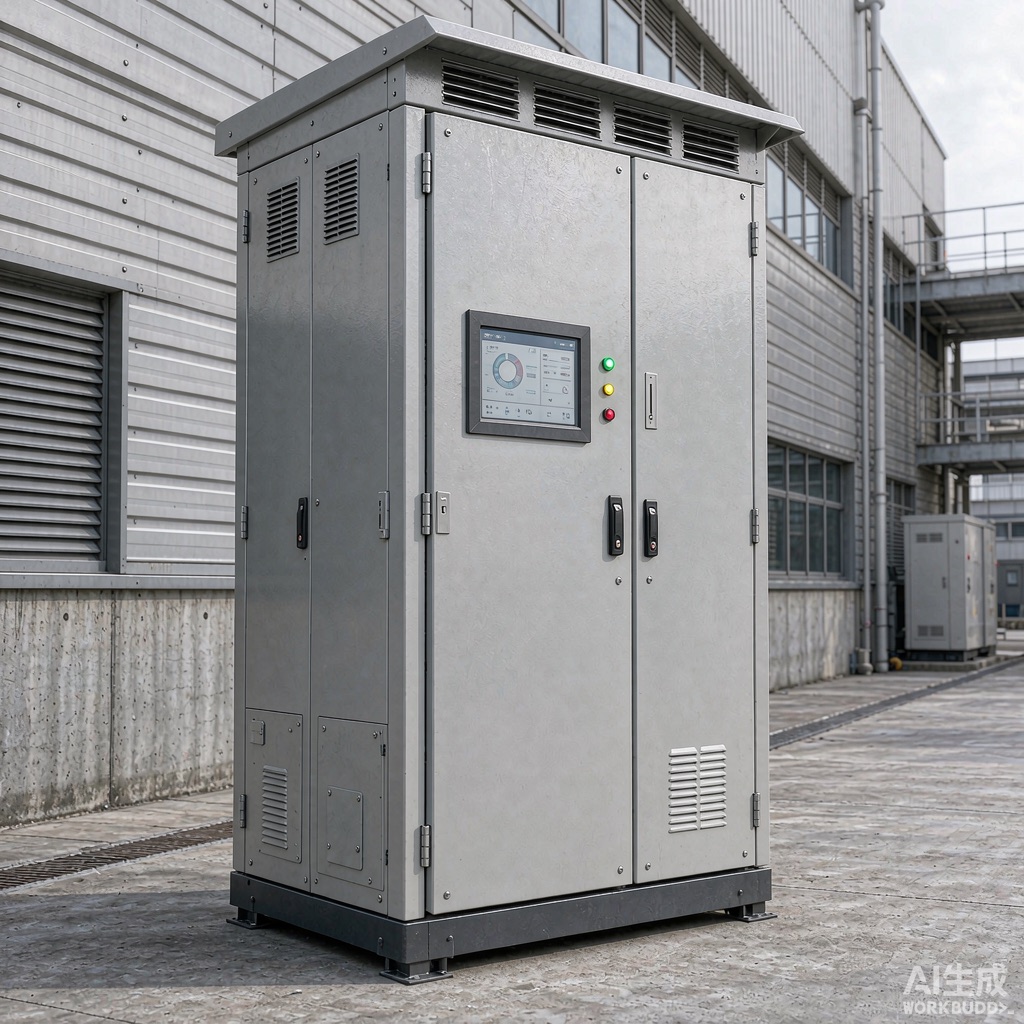 Product image
- Brand
- HighIdea
- Type
- Liquid-cooled commercial BESS cabinet
- Typical applications
- High-duty industrial storage, hot climates, solar shifting, peak shaving
- Models in range
- CI-215 215 kWh / 100 kW, CI-215P 215 kWh / 100 kW with integrated PCS, CI-430 double cabinet arrangement
- Category
- Energy Storage Systems
Why 3 °C matters more than it sounds
Cell life is sensitive to temperature, and the relationship is not linear. More important than the average temperature is the spread: if one module runs 10 °C hotter than its neighbours, that module ages faster, drags the string's usable capacity down with it, and becomes the failure point of the whole cabinet.
Liquid cooling holds the spread within about 3 °C, which is what allows a guaranteed throughput figure to be offered on a high-duty site. Air-cooled cabinets in the same duty can show a spread two or three times wider.
Duty cycle is the deciding question
One cycle per day in a temperate climate: air cooling is adequate, and the premium for liquid cooling buys little.
Two cycles per day, or continuous operation in a hot climate: liquid cooling is the engineering choice, and the temperature control is what makes the ten-year performance guarantee defensible rather than optimistic.
If you are not sure which category your site falls into, send the interval data and the site's ambient temperature profile. We will calculate the expected cell temperature under both options and tell you honestly which one the site needs.
Key Features
- 215 kWh rated energy, approximately 193 kWh usable
- 100 kW rated power, 150 kW peak for 10 s
- Liquid cooling holding cell temperature spread within 3 °C
- Suitable for two full cycles per day in ambient up to 50 °C
- Integrated detection, aerosol suppression and deflagration venting calculation
- EMS with demand limiting, arbitrage scheduling and remote diagnostics
- Half the footprint per kilowatt-hour of the air-cooled cabinet
Specifications
| Rated energy | 215 kWh (approximately 193 kWh usable) |
|---|---|
| Rated power | 100 kW continuous |
| DC voltage | 512–800 V |
| Cooling | liquid |
| Cell temperature spread | within 3 °C |
| Operating temperature | -20 °C to +50 °C |
| Fire protection | smoke and heat detection |
| Communication | Modbus TCP |
| Enclosure | steel |
| Dimensions | 1 |
| Mass | approximately 2 |
| Warranty | 10 years or stated throughput |
Specifications subject to the latest factory data. Final configuration is sized against the actual load, backup runtime and site power conditions — this table is for pre-selection only.
Applications
Two-cycle-per-day industrial storage
Sites where the battery charges and discharges twice daily and cell temperature consistency is the limiting factor on life.
Hot-climate commercial storage
Where ambient temperature stays high year round and an air-cooled cabinet would run hot for months at a time.
Solar shifting at scale
Absorbs a large commercial array's midday output and discharges the full evening load.
FAQ
Is liquid cooling worth the extra cost?
What maintenance does the cooling system need?
Can it be installed indoors?
How does the EMS integrate with my existing systems?
Related Models
CI-100
A 100 kWh / 50 kW cabinet for behind-the-meter peak shaving and demand charge reduction — sized to connect to an existing low-voltage switchboard without civil works.
View detailsCI-1000
A 20 ft container holding 1 MWh of LiFePO4 with a 500 kW PCS, liquid cooling and integrated fire protection — supplied with the documentation that the fire authority and network operator will ask for.
View detailsLP-HV-512
51.2 kWh at 512 V from ten standard modules — the platform for containerised storage and large commercial inverters where the DC bus is high voltage by design.
View details