
CI-1000 containerised battery storage (1 MWh)
A 20 ft container holding 1 MWh of LiFePO4 with a 500 kW PCS, liquid cooling and integrated fire protection — supplied with the documentation that the fire authority and network operator will ask for.
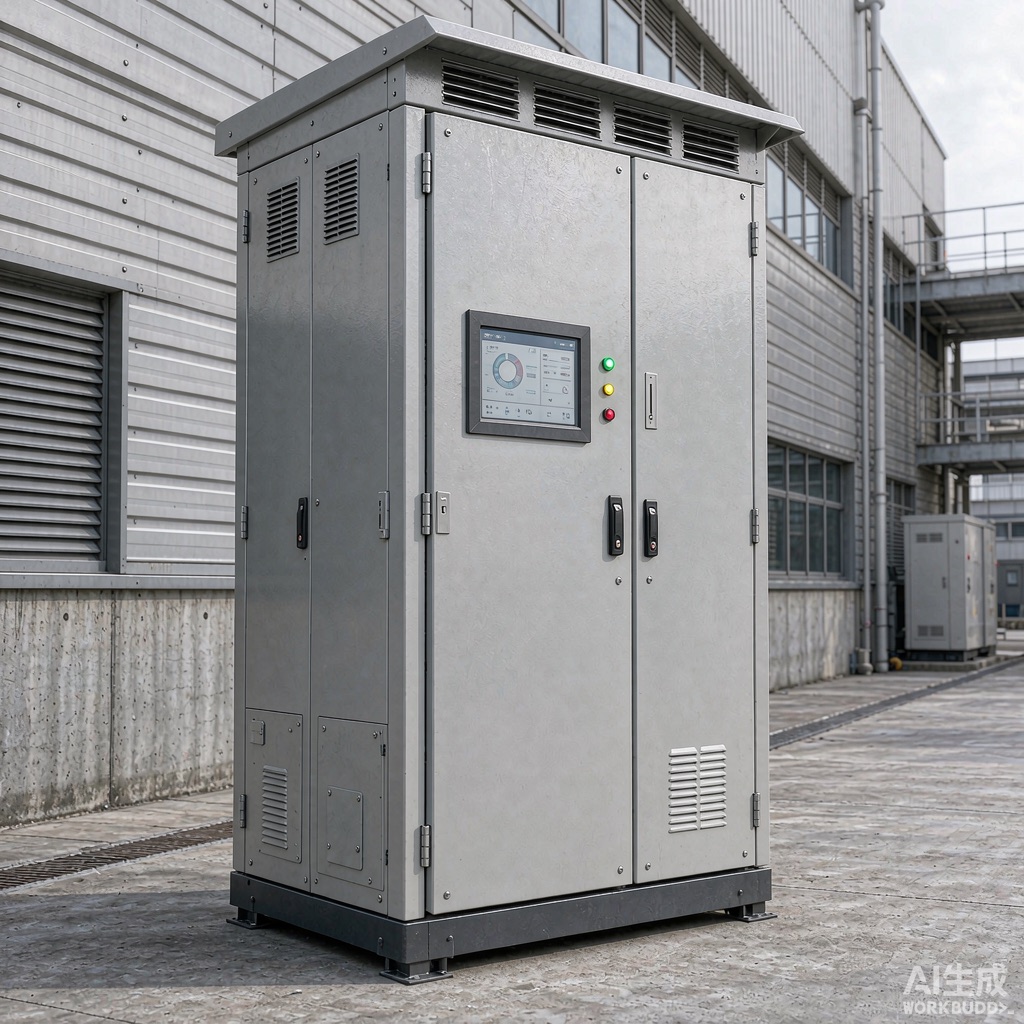 Product image
- Brand
- HighIdea
- Type
- Containerised BESS, 20 ft
- Typical applications
- Utility-scale storage, large industrial peak shaving, renewable shifting
- Models in range
- CI-1000 battery-only container, CI-1000P with integrated 500 kW PCS, CI-2000 40 ft, 2 MWh configuration
- Category
- Energy Storage Systems
It is an installation project, not a product
At this scale the battery is a fraction of the project. What determines whether it energises on schedule is the civil works, the MV connection, the network operator approval and the fire authority sign-off.
We supply the container, the battery system, the PCS where specified, and the technical documentation set: single-line diagram, protection settings, commissioning procedure, service disconnect procedure, and the venting calculation. Everything outside the container — the pad, the transformer, the MV switchgear, the cable — is site scope, and we will tell you clearly where our scope ends so it can be priced accurately.
Bring us the application, not the capacity
"We need one megawatt-hour" is a starting point, not a specification. The power-to-energy ratio, the cycle profile and the connection voltage all change the design, and a container built to the wrong ratio is expensive to modify.
Send the intended application, the load or generation profile you are trying to manage, and the connection point details. We will come back with a proposed configuration and the reasoning behind it, which is usually a more useful document than a price alone.
Key Features
- 1 MWh rated energy per 20 ft container
- 500 kW rated PCS output on the integrated variant
- Liquid cooling with temperature spread held within 3 °C
- Detection, suppression and deflagration venting calculation included
- EMS with demand limiting, arbitrage, frequency response and remote diagnostics
- Supplied with single-line diagram, protection settings and commissioning procedure
- Transport and lifting documentation provided for shipping
Specifications
| Rated energy | 1 |
|---|---|
| Rated power | 500 kW continuous |
| Container | 20 ft ISO |
| Cooling | liquid |
| Operating temperature | -20 °C to +50 °C |
| Fire protection | detection |
| Connection voltage | 400 V or 480 V AC |
| Communication | Modbus TCP |
| Mass | approximately 22 |
| Warranty | 10 years or stated throughput |
Specifications subject to the latest factory data. Final configuration is sized against the actual load, backup runtime and site power conditions — this table is for pre-selection only.
Applications
Utility-scale storage
Multiple containers in parallel behind a shared MV connection for arbitrage, capacity support or renewable firming.
Large industrial site
A single container covering the demand peaks of a site where the switchboard capacity is the constraint rather than energy.
Renewable firming
Smoothing the output of a large solar or wind installation to a contractual profile.
FAQ
Is the PCS included?
What site works are required?
How is it protected against fire?
What is the lead time, realistically?
Related Models
CI-215
215 kWh / 100 kW with liquid cooling — for sites running two cycles a day in a hot climate, where air cooling would leave the cells working at a temperature that costs years of life.
View detailsLP-HV-512
51.2 kWh at 512 V from ten standard modules — the platform for containerised storage and large commercial inverters where the DC bus is high voltage by design.
View details