
PS-5 portable power station (5 kWh)
A wheeled 5 kWh system with a 3 kW inverter and 6 kW surge — the size that runs tools and small machinery on site without needing two people and a lift to move it.
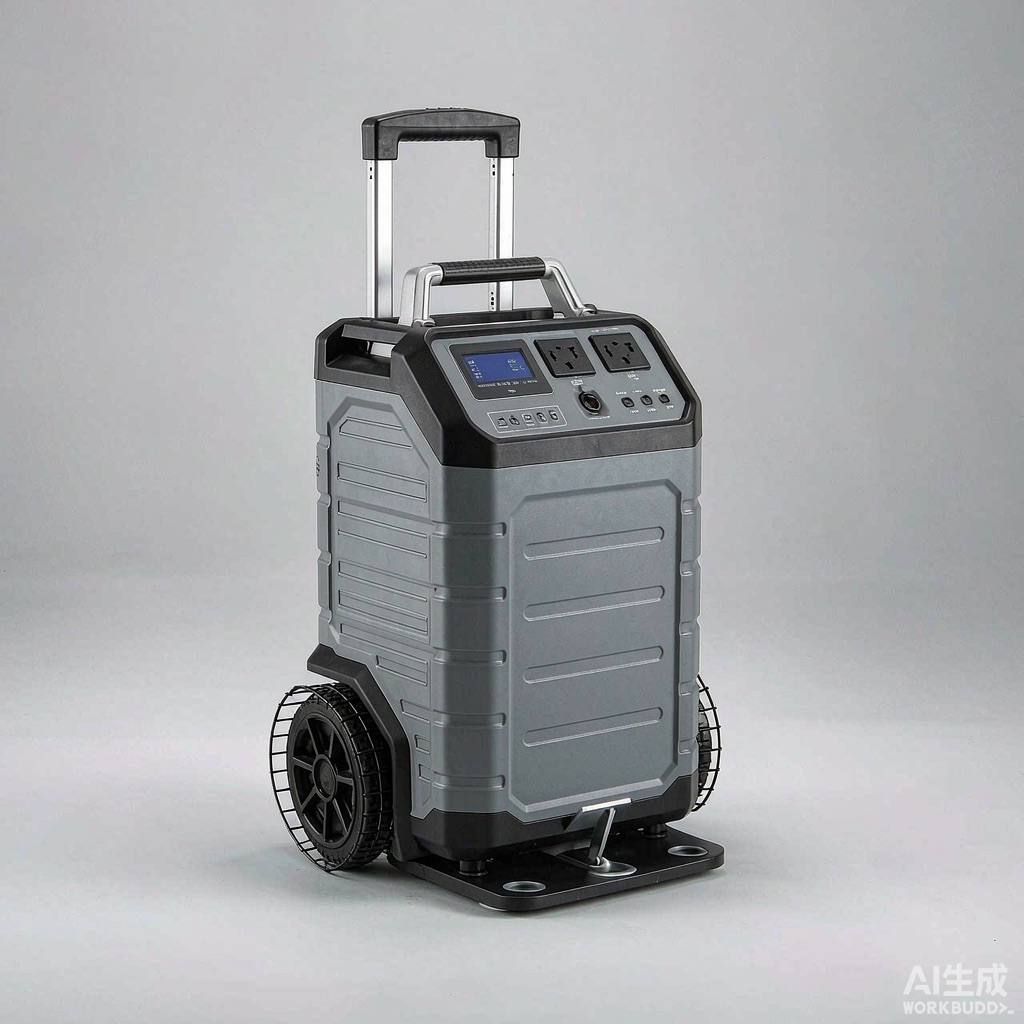 Product image
- Brand
- HighIdea
- Type
- Portable ESS, trolley format
- Typical applications
- Site power, events, mobile offices, field service
- Models in range
- PS-5 standard trolley, PS-5S stackable, no wheels, PS-10 10.2 kWh twin-module
- Category
- Energy Storage Systems
The surge rating decides the purchase
Customers compare watt-hours, then discover their tool will not start. An induction motor draws three to six times its running current for a period that varies with the load on the tool at start-up.
Specify the load's starting current, not its running watts. A 1.2 kW compressor pulling 5 kW for four seconds needs a system rated for that surge — not simply one with a bigger battery.
Silence is the product
The alternative at this scale is a generator. A generator is cheaper for continuous heavy load, and it is the right answer for that. Where the load is modest, intermittent, or located near people, the battery wins on noise, emissions and the fact that it can operate indoors or in a confined area where a generator cannot legally run.
Key Features
- 5.12 kWh rated, approximately 4.6 kWh usable
- 3 kW continuous pure sine wave output, 6 kW surge for 2 s
- MPPT solar input up to 1.5 kW
- Wheeled trolley with a telescopic handle and lifting points
- AC, USB-A, USB-C and 12 V DC outlets
- LCD showing state of charge, load and remaining runtime
- Field-replaceable battery module — a failed unit is repairable
Specifications
| Rated energy | 5.12 kWh |
|---|---|
| Usable energy | approximately 4.6 kWh at 90 % depth of discharge |
| AC output | 3 kW continuous |
| AC output voltage | 230 V / 50 Hz or 120 V / 60 Hz |
| Solar input | MPPT |
| Outlets | 2 × AC |
| Charging | AC mains or solar |
| Enclosure | wheeled trolley |
| Mass | approximately 68 kg |
| Warranty | 3 years |
Specifications subject to the latest factory data. Final configuration is sized against the actual load, backup runtime and site power conditions — this table is for pre-selection only.
Applications
Construction and site power
Runs hand tools, lighting and small machinery where there is no supply, and can be recharged from a generator or solar during the day.
Events and catering
Silent power for sound, lighting and refrigeration without a generator running next to the guests.
Mobile office and welfare
Powers laptops, communications and a small air-conditioning unit through a working day.
FAQ
What can a 3 kW output actually run?
How long does it take to charge?
Can I move it on my own?
Is it repairable?
Related Models
HE-5
A wall-mounted 5.12 kWh pack for a single-inverter household — slim enough for a garage wall, with the inverter protocol loaded at the factory so it is recognised on first power-up.
View detailsPS-2
A 2 kWh case-format system light enough for two people to carry — for field service, events and standby duty where the load is modest but the location has no supply.
View details