
HE-5 wall-mounted 5.12 kWh home battery
A wall-mounted 5.12 kWh pack for a single-inverter household — slim enough for a garage wall, with the inverter protocol loaded at the factory so it is recognised on first power-up.
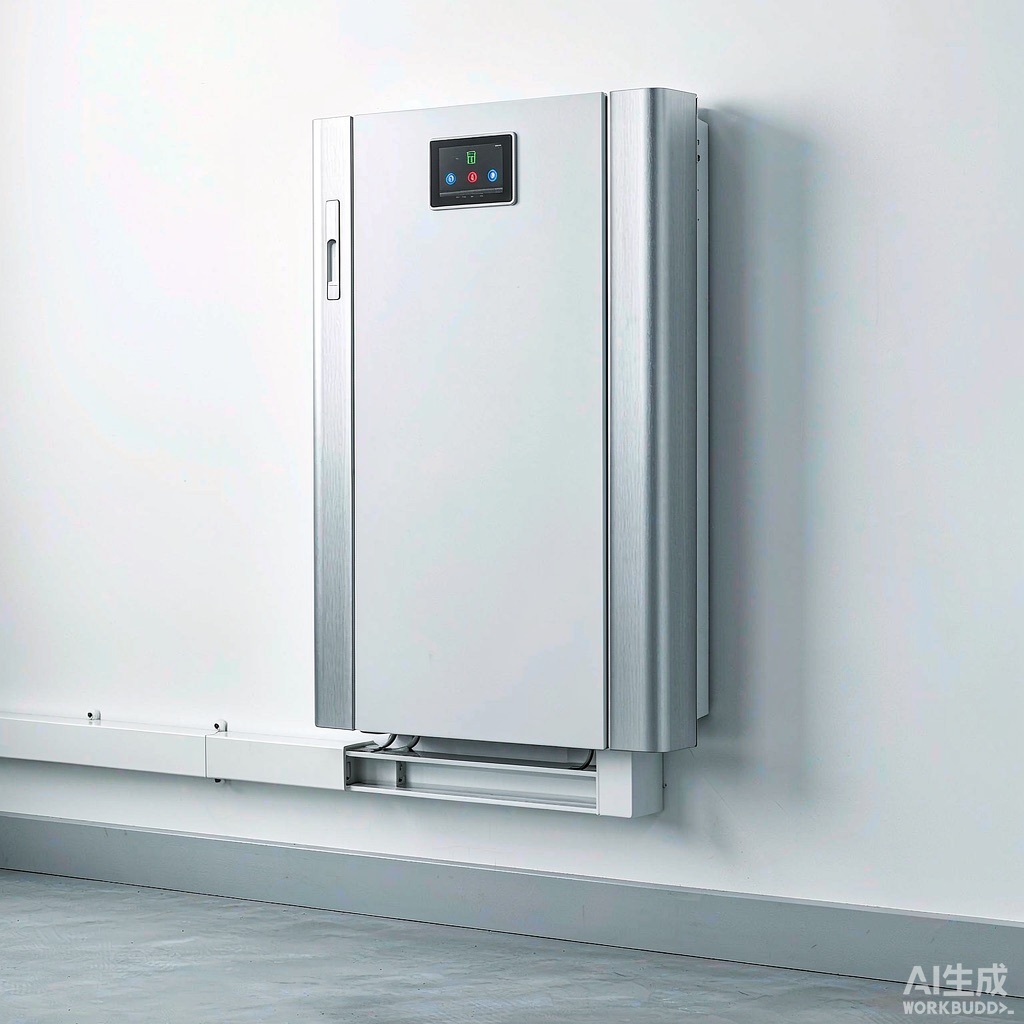 Product image
- Brand
- HighIdea
- Type
- 51.2 V residential ESS module
- Typical applications
- Single-inverter home storage, retrofit with an existing hybrid inverter
- Models in range
- HE-5 standard white, HE-5B black enclosure, OEM branding, HE-5W outdoor IP65 variant
- Category
- Energy Storage Systems
Start from the evening load, not the array size
The most common residential specification error is sizing the battery to the solar array rather than to consumption. A 6 kW array on a sunny day produces far more than a household can store, and the surplus is exported at whatever the tariff allows.
Size the battery from the evening and overnight consumption you want to cover, then check that the array can recharge it. A household consuming 7 kWh after sunset, with a 4 kW array, is well served by one or two of these units.
The installation details that decide whether it is worth it
Three practical points come up on almost every installation:
- Where it goes. A wall inside the thermal envelope keeps the pack warm, which improves both available capacity and cycle life. An unheated garage in a cold climate will reduce winter performance noticeably.
- Cable length to the inverter. Cable sizing is on current and distance; a long run to the inverter may push up the cross-section and the cost.
- Who signs off the connection. In most markets the battery connects to the inverter's battery terminals and requires no grid-side certification, but a licensed electrician should make the connection and the installation should be documented for the equipment warranty.
Key Features
- 5.12 kWh rated, approximately 4.6 kWh usable at 90 % depth of discharge
- 51.2 V, 100 Ah, 16S BMS with CAN and RS485
- Wall-mount bracket included; floor-stand kit optional
- Up to six units in parallel for 30.7 kWh without changing the inverter
- Inverter protocol loaded at the factory — confirm the model when ordering
- 10-year design life or 6,000 cycles, whichever comes first
- IP65 outdoor variant for installation outside the thermal envelope
Specifications
| Nominal voltage | 51.2 V (16S) |
|---|---|
| Rated energy | 5.12 kWh |
| Usable energy | approximately 4.6 kWh at 90 % depth of discharge |
| Continuous discharge current | 100 A |
| Peak discharge current | 200 A for 10 s |
| Communication | CAN |
| Cycle life | 6 |
| Operating temperature | -10 °C to +55 °C |
| Enclosure | aluminium and steel |
| Dimensions | 520 × 480 × 165 mm |
| Mass | approximately 52 kg |
| Warranty | 10 years or stated throughput |
Specifications subject to the latest factory data. Final configuration is sized against the actual load, backup runtime and site power conditions — this table is for pre-selection only.
Applications
Solar self-consumption
Stores midday generation and discharges into the evening peak. A single unit suits a household with a 3–5 kW array and no heat pump.
Tariff arbitrage
Charges on an off-peak tariff and discharges during the peak window, where the tariff spread makes the payback work.
Backup for essential circuits
With a hybrid inverter, keeps lighting, communications and refrigeration running through a grid outage.
FAQ
5.12 kWh seems small — is it enough?
Can I add a second unit later?
Indoors or outdoors?
Will it work with my existing inverter?
Related Models
HE-10
Two 5.12 kWh modules on a floor-stand rack — the configuration for households with a heat pump or an electric vehicle, where a single wall unit would cycle too deeply every day.
View detailsLP48-100
5.12 kWh at 51.2 V with a 16S BMS that speaks the protocol most hybrid inverters and telecom rectifiers expect — configured at the factory to your equipment.
View detailsRM-5
A 3U rack module built for integrators — frozen mechanical dimensions batch to batch, documented BMS registers, and predictable paralleling up to sixteen units.
View details