
HE-10 stackable 10.24 kWh home battery
Two 5.12 kWh modules on a floor-stand rack — the configuration for households with a heat pump or an electric vehicle, where a single wall unit would cycle too deeply every day.
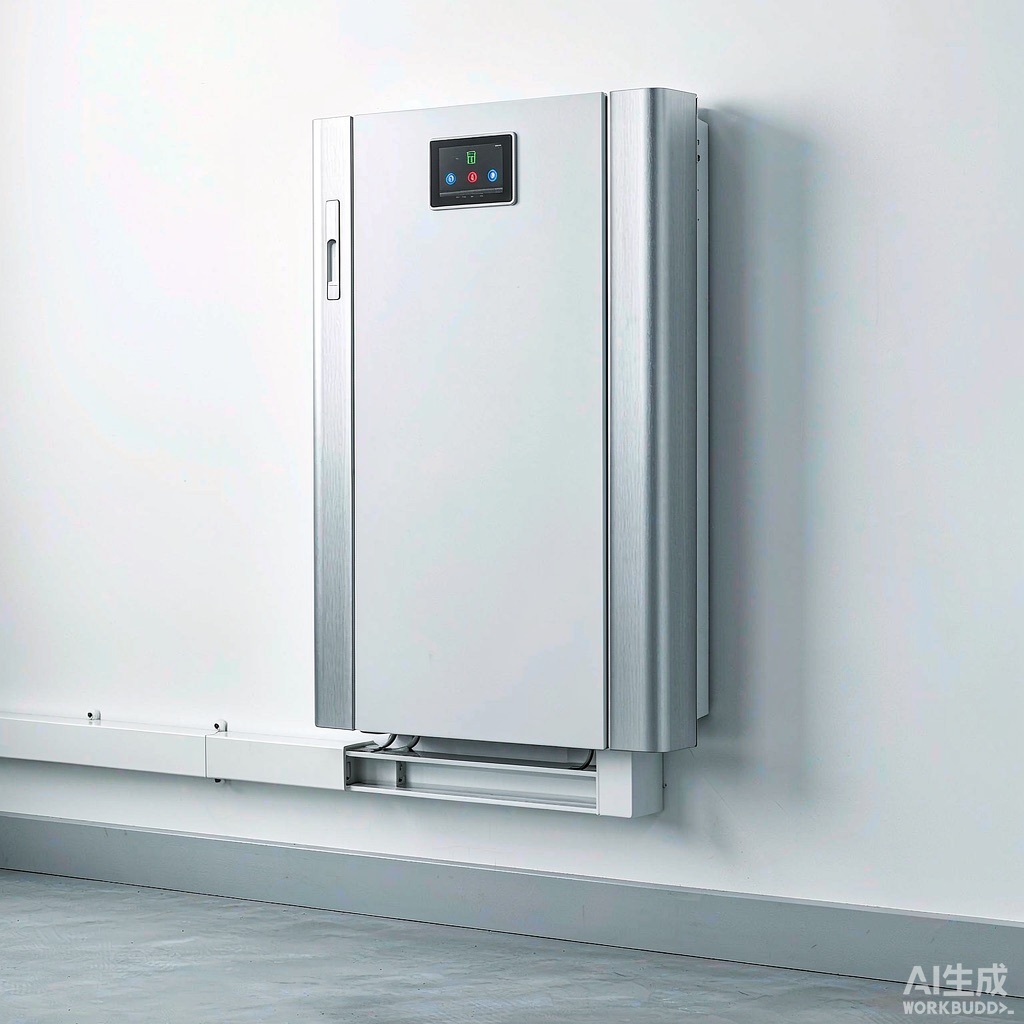 Product image
- Brand
- HighIdea
- Type
- 51.2 V residential ESS, two-module stack
- Typical applications
- Households with heat pump or EV, larger daily cycling
- Models in range
- HE-10 two-module stack, HE-15 three-module stack, HE-10B black enclosure, OEM branding
- Category
- Energy Storage Systems
Depth of discharge is the number that decides the warranty position
A 10.24 kWh pack cycled from 90 % to 20 % every day uses 7.2 kWh and sits comfortably inside the design duty. The same pack discharged to empty every night uses 9.2 kWh and will not reach its rated cycle count, because cycle life is specified at a defined depth.
In practice, the difference between a ten-year battery and a six-year battery is often not the cell — it is whether the system was sized so that daily cycling stays shallow.
Serviceability is designed in
Each module in the stack is a complete unit with its own BMS. If one fails, it is isolated, disconnected and replaced without disturbing the others. That matters ten years after installation, when the original installer may no longer be trading and the replacement has to be done by whoever is available.
The inter-module busbars are accessible from the front, and the replacement procedure is published as a document rather than a phone call.
Key Features
- 10.24 kWh rated, approximately 9.2 kWh usable at 90 % depth of discharge
- Two 5.12 kWh modules on a floor-stand rack with inter-module busbars
- Expand to three, four, five or six modules without changing the inverter
- Each module individually replaceable — a failure does not require removing the stack
- CAN, RS485 and Bluetooth communication
- 6,000 cycle life at 80 % depth of discharge
- 10-year warranty or stated throughput
Specifications
| Nominal voltage | 51.2 V (16S per module) |
|---|---|
| Rated energy | 10.24 kWh (2 × 5.12 kWh) |
| Usable energy | approximately 9.2 kWh at 90 % depth of discharge |
| Continuous discharge current | 100 A per module |
| Communication | CAN |
| Cycle life | 6 |
| Operating temperature | 0 °C to +50 °C recommended |
| Enclosure | steel module |
| Footprint | 600 × 420 mm per stack of two |
| Mass | approximately 112 kg per two-module stack |
| Warranty | 10 years or stated throughput |
Specifications subject to the latest factory data. Final configuration is sized against the actual load, backup runtime and site power conditions — this table is for pre-selection only.
Applications
Household with a heat pump
Evening and overnight heating load of 8–12 kWh is covered without deep daily discharge, which is what preserves the cycle life.
Overnight EV charging
Stores daytime solar and discharges into an overnight charge window, reducing the grid import at peak tariff.
Larger household with backup
Combined with a hybrid inverter, covers essential circuits through a grid outage for a full day.
FAQ
Why stack modules rather than one larger unit?
How deep will it cycle?
Can a stack be partly outdoors?
What preparation should happen at installation?
Related Models
HE-15
The top of the residential range — enough stored energy for a household with a heat pump, an EV and a backup requirement, without pushing the modules into deep daily cycling.
View detailsHE-5
A wall-mounted 5.12 kWh pack for a single-inverter household — slim enough for a garage wall, with the inverter protocol loaded at the factory so it is recognised on first power-up.
View detailsRM-5
A 3U rack module built for integrators — frozen mechanical dimensions batch to batch, documented BMS registers, and predictable paralleling up to sixteen units.
View details