
RM-5 19-inch rack battery module (5.12 kWh)
A 3U rack module built for integrators — frozen mechanical dimensions batch to batch, documented BMS registers, and predictable paralleling up to sixteen units.
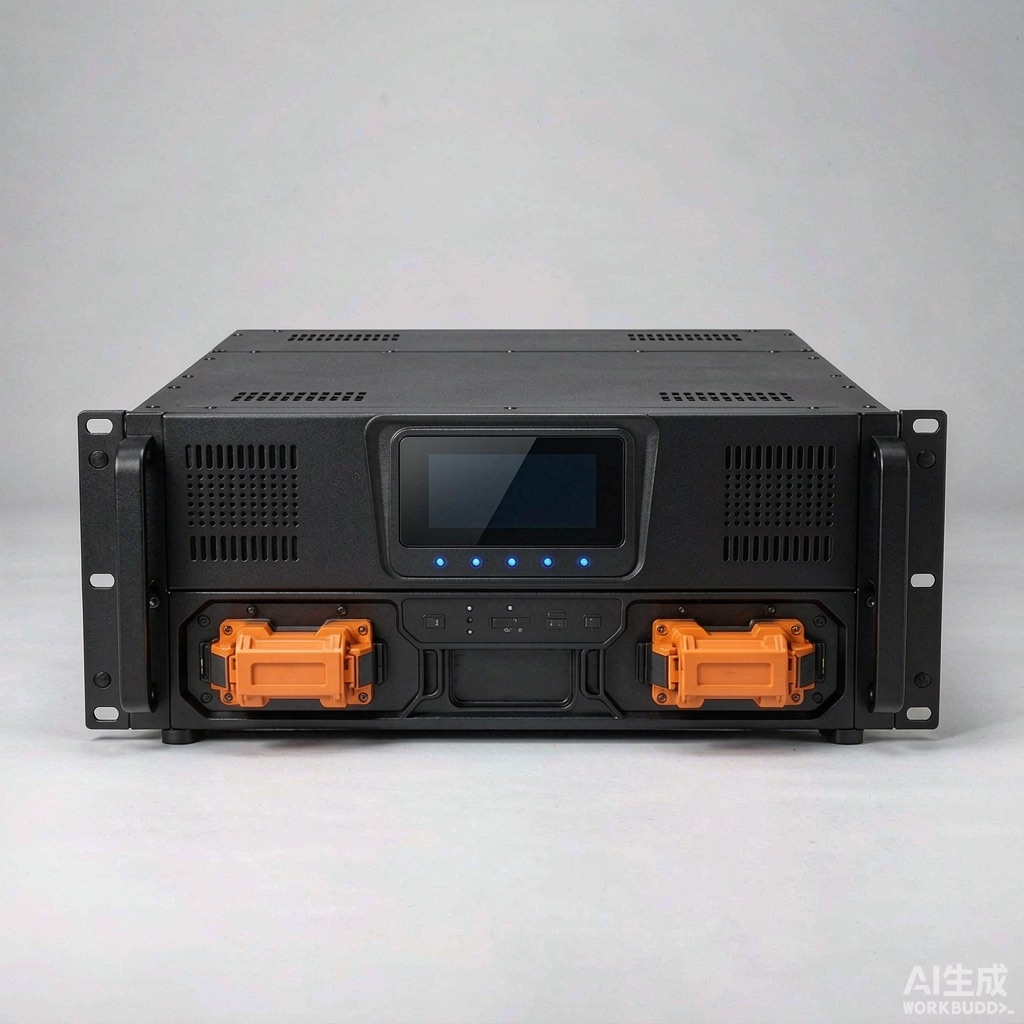 Product image
- Brand
- HighIdea
- Type
- 51.2 V rack module, 3U 19-inch
- Typical applications
- Battery cabinets, integrator builds, telecom racks, UPS replacement
- Models in range
- RM-5 3U 100 Ah / 5.12 kWh, RM-7 4U 150 Ah / 7.68 kWh, RM-15 4U 280 Ah / 14.34 kWh
- Category
- Energy Storage Systems
Consistency is the product
An integrator's real cost is engineering time. A module that gains two per cent energy density but grows eight millimetres in depth invalidates a cabinet design, a shipping carton and a mounting jig — and that cost lands on the customer, not the supplier.
We freeze the mechanical envelope for the life of a platform and publish changes in advance. When a platform does change, the previous revision is supported alongside the new one for a defined period so existing stock can be used up.
Paralleling behaviour
Sixteen modules in parallel with automatic address assignment, and current sharing within five per cent across the string. Where sharing drifts beyond that, it is almost always a cabling asymmetry rather than a module fault — equal cable lengths from each module to the busbar are worth the extra effort.
If your cabinet has an unusual busbar arrangement, send the drawing. We will tell you whether the asymmetry is within tolerance or whether the current sharing will be poor enough to affect the warranty.
Key Features
- 19-inch 3U form factor, 5.12 kWh at 51.2 V
- Fixed mounting holes, depth and mass across production batches
- Documented BMS register map — no reverse engineering required
- Parallel up to 16 modules with automatic address assignment
- Current sharing within 5 % across parallel modules
- Front-panel display and front-accessible terminals
- CAN, RS485 and Bluetooth as standard
Specifications
| Nominal voltage | 51.2 V (16S) |
|---|---|
| Rated energy | 5.12 kWh |
| Usable energy | approximately 4.6 kWh at 90 % depth of discharge |
| Continuous discharge current | 100 A |
| Peak discharge current | 200 A for 10 s |
| Form factor | 19-inch 3U |
| Communication | CAN |
| Cycle life | 6 |
| Parallel capability | up to 16 modules |
| Enclosure | steel chassis |
| Mass | approximately 46 kg |
| Warranty | 10 years or stated throughput |
Specifications subject to the latest factory data. Final configuration is sized against the actual load, backup runtime and site power conditions — this table is for pre-selection only.
Applications
Integrator battery cabinets
A module whose envelope does not change between orders, so the cabinet design stays valid and the jigs keep working.
Telecom rack retrofit
Replaces a lead-acid string in a 19-inch rack without changing the rack or the DC distribution.
Building block for high-voltage stacks
The same module is used in our LP-HV series, so spares and service procedures are common across low and high-voltage platforms.
FAQ
What does "documented register map" actually give me?
Can I mix module sizes in one cabinet?
Do you sell the cabinet too?
What tolerances can you hold on the mechanical envelope?
Related Models
BC-30
Six rack modules, busbars made off, DC breaker fitted and one communication interface — so the cabinet arrives ready to connect rather than as a set of parts to assemble on site.
View detailsLP48-100
5.12 kWh at 51.2 V with a 16S BMS that speaks the protocol most hybrid inverters and telecom rectifiers expect — configured at the factory to your equipment.
View detailsRM-15
14.34 kWh in 4U with a 200 A BMS — for integrators who need maximum energy per rack unit and can handle the mass with proper lifting equipment.
View details