
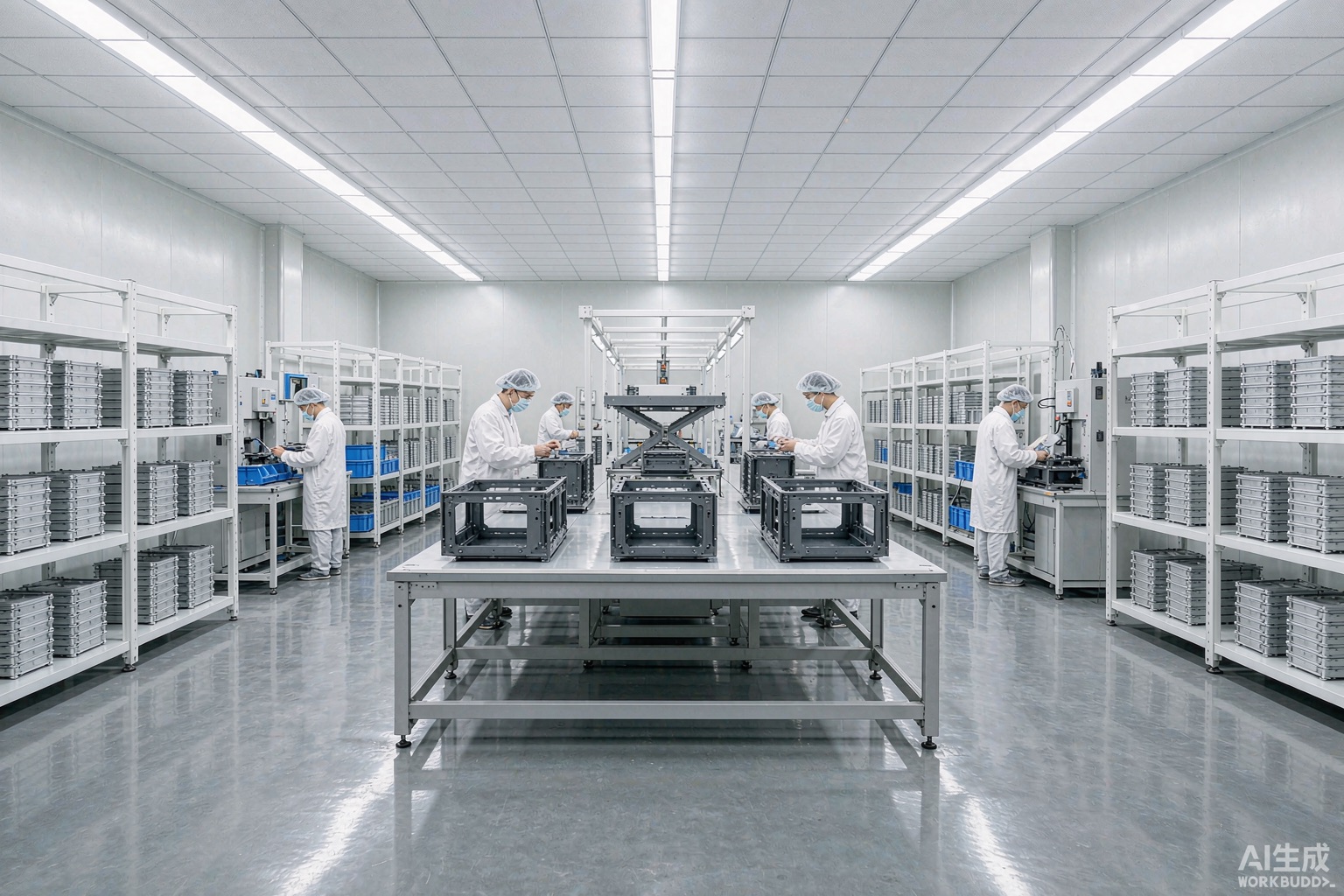
Industrial machinery & AGV packs
A machine battery works a shift pattern, charges in a window that the operation allows, and is mounted where vibration and shock are constant. Those three constraints shape the specification more than the energy figure.
Specification follows the shift pattern
An industrial machine battery is designed around when it can charge, not just how much energy it needs. Three patterns cover most cases:
- Overnight charge. The simplest arrangement. The pack must hold a full working day, which usually makes it the largest of the three options.
- Opportunity charging. Topping up during breaks and shift changes. Requires a high charge current and a pack that is comfortable at partial state of charge, but allows a smaller pack.
- Pack swapping. A spare pack charges while the machine works. Removes charging from downtime entirely, at the cost of a spare per machine and a quick-release mounting design.
Opportunity charging is often the least expensive overall, because it reduces the capacity purchased. It is also the pattern most often overlooked at specification stage.
Mounting is the failure point
In our own failure analysis, machine-mounted packs fail at the mounting points and cable entries more often than at the cells. Vibration, repeated shock and the torque of a machine that turns and brakes put loads into the enclosure that a case designed for a static installation does not handle.
Steel cases with proper flanges, cable entries with strain relief, and a mounting design that respects the machine's vibration profile are what prevent those failures. It is not glamorous engineering, but it is the difference between a pack that lasts and one that is replaced every eighteen months.
OEM machine programmes
For machine builders, the pack is drawn to fit the bay rather than adapted from a standard enclosure. Send the bay dimensions, the mounting positions and the electrical interface, and we will produce a pack that drops into the machine without an adapter bracket — and that stays dimensionally identical across production batches, which matters when the machine has a multi-year build programme.