
Three-Phase High-Frequency UPS
Three-phase high-frequency online UPS in tower or rack format — full double conversion from 10 to 80kVA for data centers and critical infrastructure.
Three-phase high-frequency online UPS systems protect loads that run on 3-in / 3-out power: data center rows, industrial automation, medical imaging, building services and process control. The topology is full online double conversion (VFI) with DSP control — the load always runs on the inverter, so sags, surges, frequency drift and generator ripple never reach it, and transfer time to battery is zero.
Compared with transformer-based power-frequency systems, high-frequency conversion removes the output transformer: efficiency goes up, the cabinet gets smaller and lighter, and the same kVA fits into a standard IT footprint. HighIdea builds this tier in two formats.
The two platforms
| EX33 tower | 33ET rack | |
|---|---|---|
| Capacity | 10 / 20 / 30 / 40 / 60 / 80kVA | 10 / 20 / 30 / 40 / 60kVA |
| Format | Floor-standing tower cabinet | 19-inch / 23-inch rack cabinet |
| Battery | External VRLA racks or LiFePO4 packs | External LiFePO4 packs, runtime per row |
| Control | Full LCD control panel, DSP, measurements and event log | DSP, measurements, event log, optional SNMP / Modbus / cloud monitoring |
| Isolation | Optional isolation transformer | Rack-standard, no built-in transformer |
| Best for | Plant rooms, hospitals, infrastructure with floor space | Standardized data center cabinets and modular IT rooms |
- EX33 (10-80kVA): tower format with high-frequency online topology, full LCD control panel, optional isolation transformer.
- 33ET (10-60kVA): rack format for standardized data center cabinets, external battery for flexible runtime.
Both families support parallel operation for N+1 redundancy or capacity expansion, and both accept OEM/ODM customization of capacity, voltage, runtime, communication protocols and branding.
Choosing the right configuration
Start with the load, not the UPS nameplate. Confirm total kVA and kW, the power factor, the input and output phase arrangement, the site's 380 / 400 / 415Vac standard, the required autonomy in minutes, and whether the load includes motors or other high-inrush equipment. Three-phase input / output configuration matters here — see the 3/1 vs 3/3 configuration guide before fixing the single-line diagram.
For a compact, efficient standard IT or plant load, this high-frequency tier is normally the right starting point. For motor-heavy or electrically hostile sites — power plants, substations, steel, mining, chemical plants — the Industrial UPS sub-category covers transformer-isolated power-frequency systems from 6 to 600kVA. The topology decision is explained in line-frequency vs high-frequency UPS, and bypass arrangements are covered in UPS bypass configuration.
For smaller single-phase IT loads, see Online UPS 1-10kVA and Lithium Battery UPS.
Available models2 series
| Model | Type | Typical applications | Notes |
|---|---|---|---|
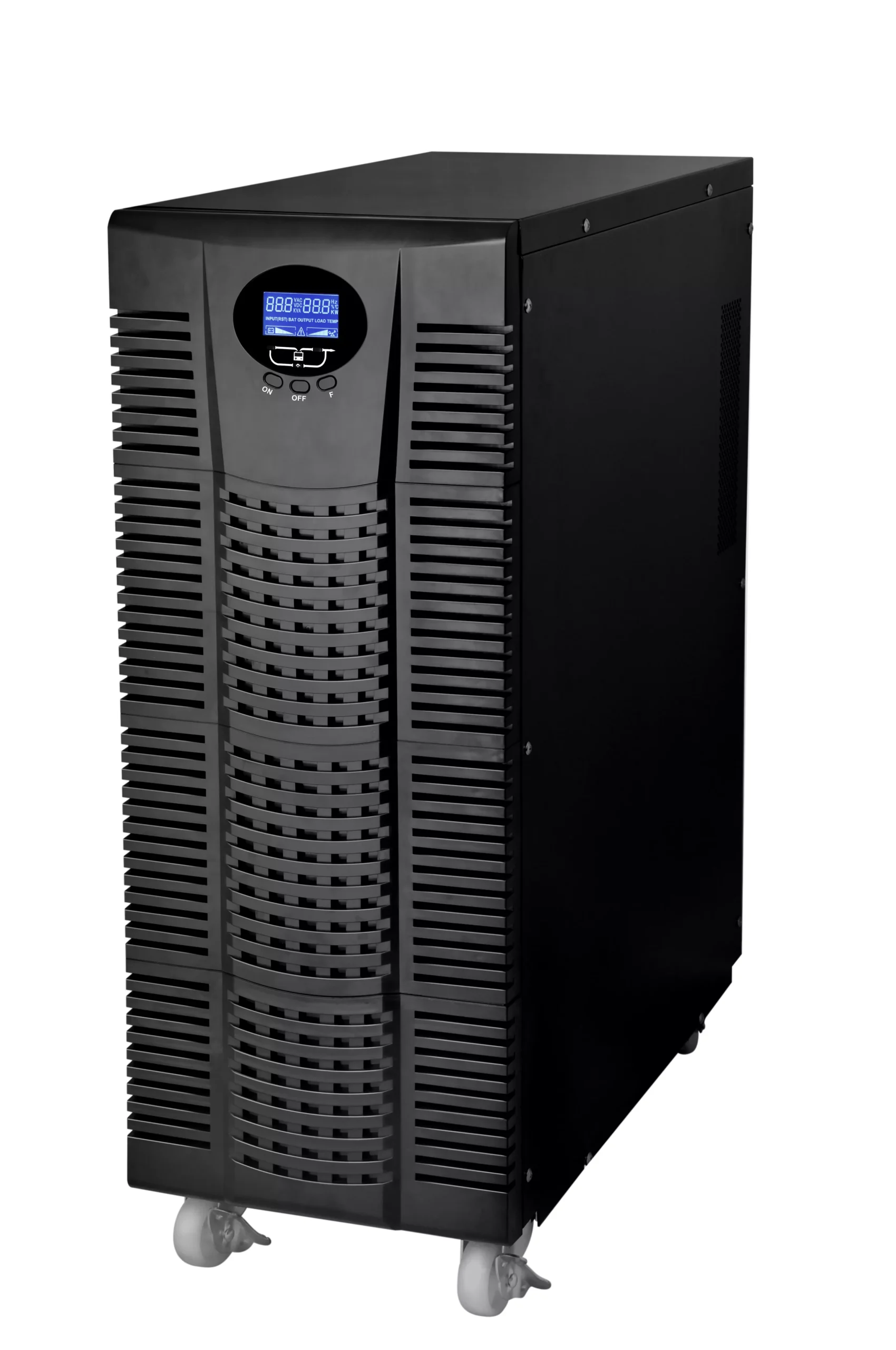 EX33 Series |
Three-phase online UPS (tower) | Data centers, industrial plants, hospitals, infrastructure | 3-in / 3-out high-frequency online |
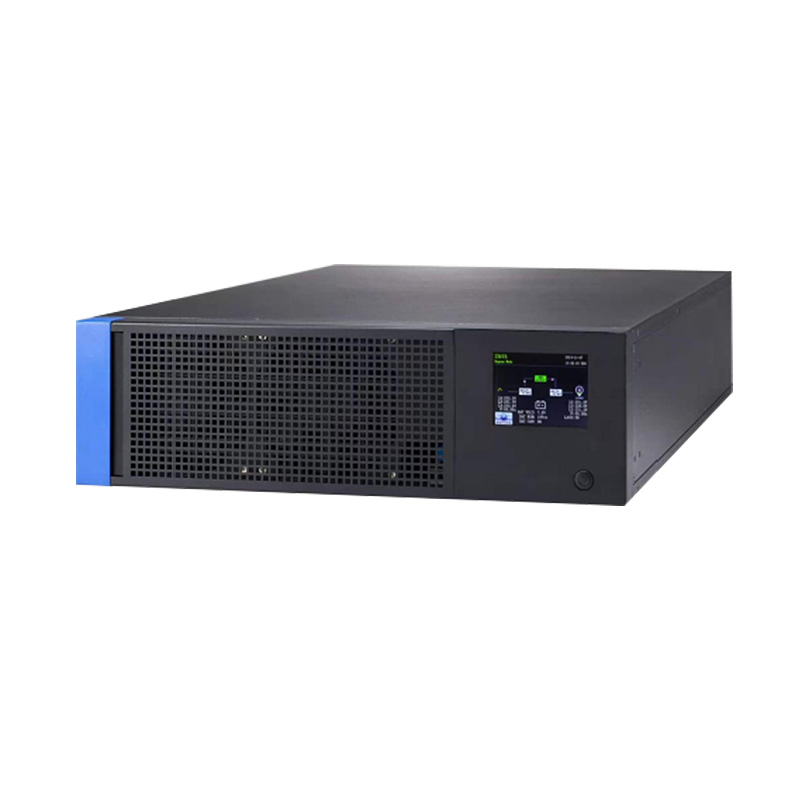 33ET10–60 Series |
Three-phase online UPS (rack) | Data center racks, server farms, modular IT rooms | 3-in / 3-out rack format, external LiFePO4 |
Models with links have detailed specification pages; unlisted models are also available on request. Capacity and quantity should be sized by our engineers against the actual load — never by nameplate rating alone.
Three-Phase High-Frequency UPS — frequently asked questions
What capacity range does the three-phase high-frequency UPS cover?
Tower or rack — which one should I choose?
What is the difference between high-frequency and power-frequency three-phase UPS?
Can these units run in parallel?
What battery options are available?
Can I get galvanic isolation on a high-frequency unit?
Other UPS Power Supply categories
Compare the alternatives within the same product line.
Lithium Battery UPS
Online UPS with built-in or external LiFePO4 — 1 to 10kVA, tower and rack, 30+ minutes full-load backup.
View detailsOnline UPS
High-frequency online double-conversion UPS, 1 to 10kVA tower and rack, pure sine wave output.
View detailsOffline UPS
Line-interactive and offline UPS from 500VA to 2000VA — cost-effective backup for PCs, POS and home office.
View details100V/110V/120V UPS
Online and offline UPS with 100–127V output for Japan, the Americas and imported equipment.
View detailsIndustrial UPS
Transformer-isolated power-frequency (industrial-frequency) UPS, 6-600kVA, with high overload capacity for power plants, substations, steel, mining and chemical plants.
View details