
Rectifier & AC-DC Power Modules
Regulated DC from a wide AC input — rack rectifiers and modular telecom power systems with battery management built in.
A telecom or station DC plant lives or dies on its rectifier stage. HighIdea AC-DC platforms combine a wide-range input, active power-factor correction, hot-swappable rectifier modules and a monitoring controller with full battery management: automatic boost/float charging, temperature compensation, low-voltage load and battery disconnect, battery capacity calculation and online battery testing.
Compare the four platforms
| Platform | DC output | Format | Defining feature | Best for |
|---|---|---|---|---|
| RP 2U AC-DC | 24 / 48 / 110 / 220 VDC | 2U 19-inch | Dual-transistor forward modules, N+1 parallel, wide 110 / 220Vac input | Substations, DC panels, small telecom rooms |
| RT4860 | 42 - 58 VDC (48V) | 1U 19-inch | 2 x 4830 rectifiers + monitoring module, 1 battery + 1 load distribution | Small PBX, access network, microwave and satellite earth stations |
| RT2430 1U | 21 - 29 VDC (24V) | 1U 19-inch | 30 / 60A, 90-280Vac input, PF >= 0.98, efficiency >= 91% | 24V telecom and industrial DC buses |
| RT 30-800A | 48 VDC | Embedded modular frame | Up to 800A, hot-swap modules, LVLD + LVBD, RS232 / RS485 | Base stations, switching offices, data rooms |
Choosing between them
Start with the DC bus voltage and the total load current. Choose RP 2U when a station DC panel needs a defined 24 / 48 / 110 / 220VDC output in a simple 2U chassis, or when several modules must be paralleled with automatic current sharing. Choose RT4860 for a compact 48V embedded system with two rectifier modules and integrated battery/load distribution. Choose RT2430 1U when the site bus is 24V and the AC input is unstable enough to need the 90-280Vac window. Choose RT 30-800A when the site must scale to hundreds of amperes with hot-swap modules, front-only access and remote monitoring.
Where the source is already DC and only the voltage needs changing, use the DC-DC Converters sub-category instead. For AC loads that need backup see UPS Power Supply.
Available models4 series
| Model | Type | Typical applications | Notes |
|---|---|---|---|
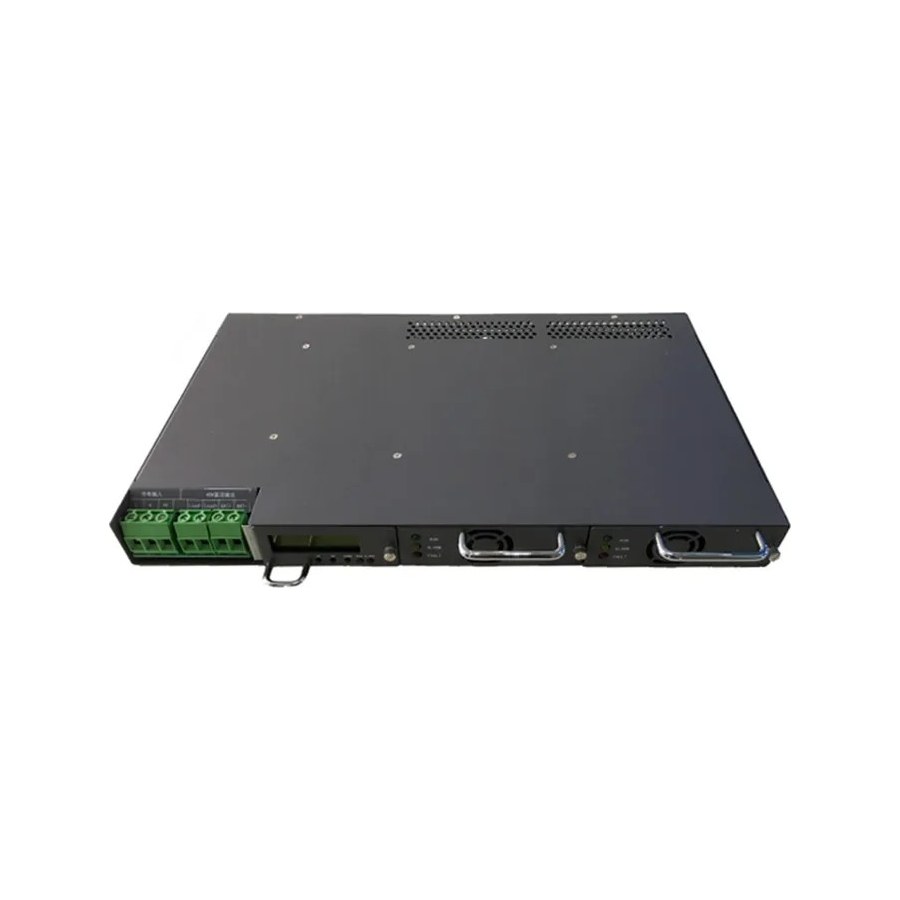 RP Series 2U |
AC-DC switching power supply / rectifier module (19-inch 2U) | Power plants, substations, telecom rooms, DC panels, equipment rooms, NAS and network cabinets | Output voltage is fixed per order; 4830 / 4850 / 48100 / 11020 / 22010 versions cover the common DC bus ratings |
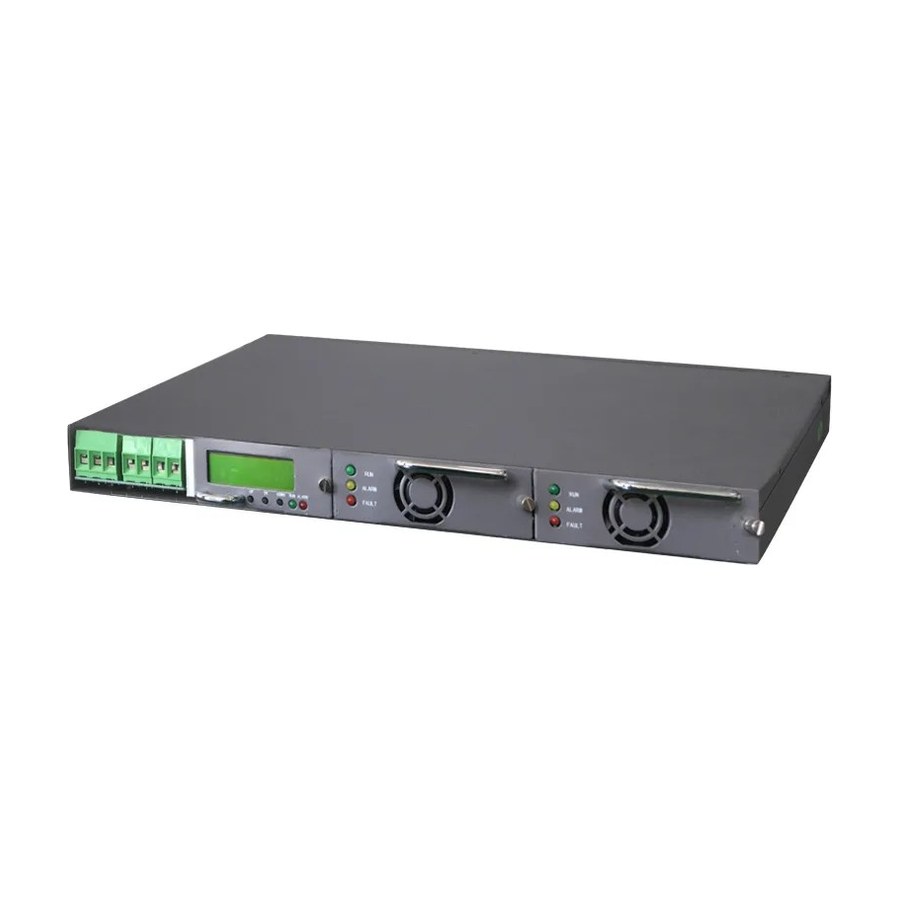 RT4860 (RT48120 family) |
Embedded 48VDC telecom rectifier system (1U 19-inch) | Small PBX, access networks, transmission equipment, mobile and satellite communication, microwave stations | Standard configuration: 2 x 4830 rectifier modules, 1 monitoring module, 1 battery + 1 load DC distribution |
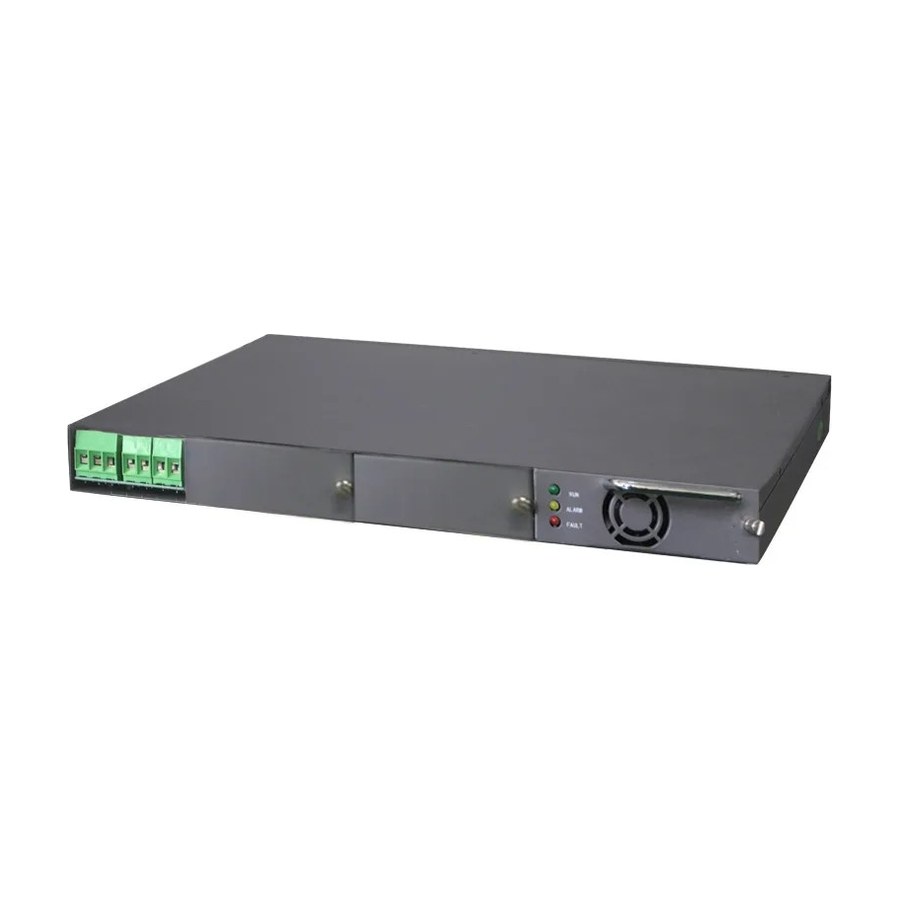 RT2430-1U / RT2430R |
24VDC rectifier switching power system (1U 19-inch) | Power systems, telecom rooms, equipment rooms, industrial control, NAS and network cabinets | RT2430-1U uses one E2430 module; RT2430R uses two rectifier modules for 60A full configuration |
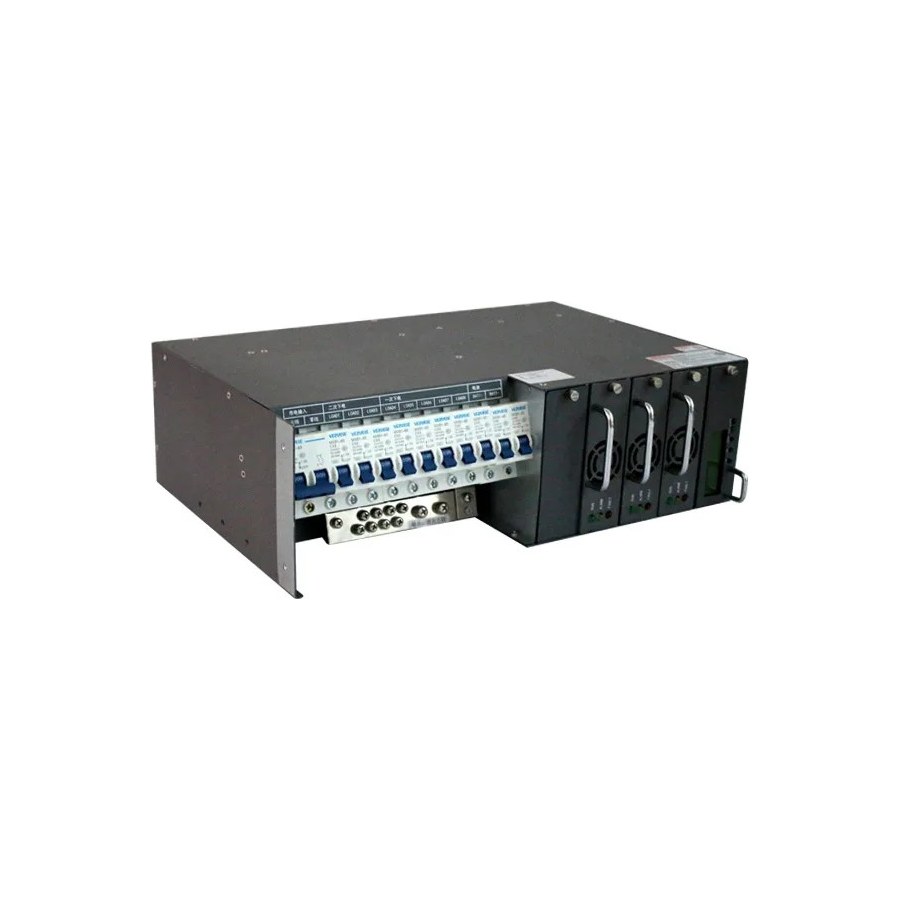 RT48 Series (30-800A) |
Modular 48VDC embedded switching power system | Telecom base stations, small and medium switching offices, microwave and satellite communication, data communication, data rooms | Total capacity up to 800A; rectifier modules are hot-swappable and replaced in under one minute |
Models with links have detailed specification pages; unlisted models are also available on request. Capacity and quantity should be sized by our engineers against the actual load — never by nameplate rating alone.
Rectifier & AC-DC Power Modules — frequently asked questions
What is the difference between a rectifier system and a UPS?
Which DC output voltages are available?
What does N+1 redundancy mean here?
Can the systems work with lithium batteries?
How is the system monitored remotely?
Do you customize distribution and alarm settings?
Other Switching Power Supplies & Rectifiers categories
Compare the alternatives within the same product line.