
Online DC-AC Inverters
Continuous inverter-fed output from a station or telecom DC bus — 0 ms transfer, full isolation and no noise fed back into the DC system.
Online DC-AC inverters are the standard choice whenever the protected load is fed from a station battery or telecom DC bus and cannot tolerate a break. Full double conversion keeps the load on the inverter continuously: input disturbances never reach the output, transfer time is zero, and galvanic isolation keeps switching noise out of the DC system.
Compare the five platforms
| Platform | Capacity | DC input | Defining feature | Best for |
|---|---|---|---|---|
| H 1-3kVA | 1-3 kVA | 24 / 48 / 110 / 220 / 240 VDC | Compact rack online inverter, multiple DC bus options | Substations, base stations, HVDC & server rooms |
| H 6-20k | 6-20 kVA | 160-300 VDC wide | External input/output isolation transformers, high surge withstand | Utility DC panels, HVDC rooms |
| HM 3-15kVA | 3-15 kVA | 48 VDC | Modular 3 kVA blocks, up to 5 in parallel (4+1) | Telecom rooms needing scalable redundancy |
| HP 6k | 6 kVA | 24 / 48 VDC | CPU/PWM control with LCD, rack or portable case | Telecom cabinets and field deployments |
| HT 1-20k | 1-20 kVA | Station DC panel | Power-frequency double conversion with built-in isolation transformer | Power plants, substations, RTU/SCADA |
Choosing between them
Start from the DC bus voltage — it is the parameter that cannot be changed later. Then size the inverter from the load's kVA and kW, its inrush behaviour and the required autonomy. Choose H 1-3kVA for compact 1-3kVA cabinets with a defined DC bus, H 6-20k where a wide 160-300VDC window and external transformers are specified, HM where capacity must grow module by module, HP for CPU-controlled rack or portable installations, and HT where a transformer-isolated power-frequency design is mandated by the utility.
Where a brief 8-10 ms transfer is acceptable and efficiency matters more, the Standby & Offline Inverters sub-category offers a lower-cost alternative. For the wider AC-input range see UPS Power Supply, and for PV-fed systems see Solar Inverters.
Available models5 series
| Model | Type | Typical applications | Notes |
|---|---|---|---|
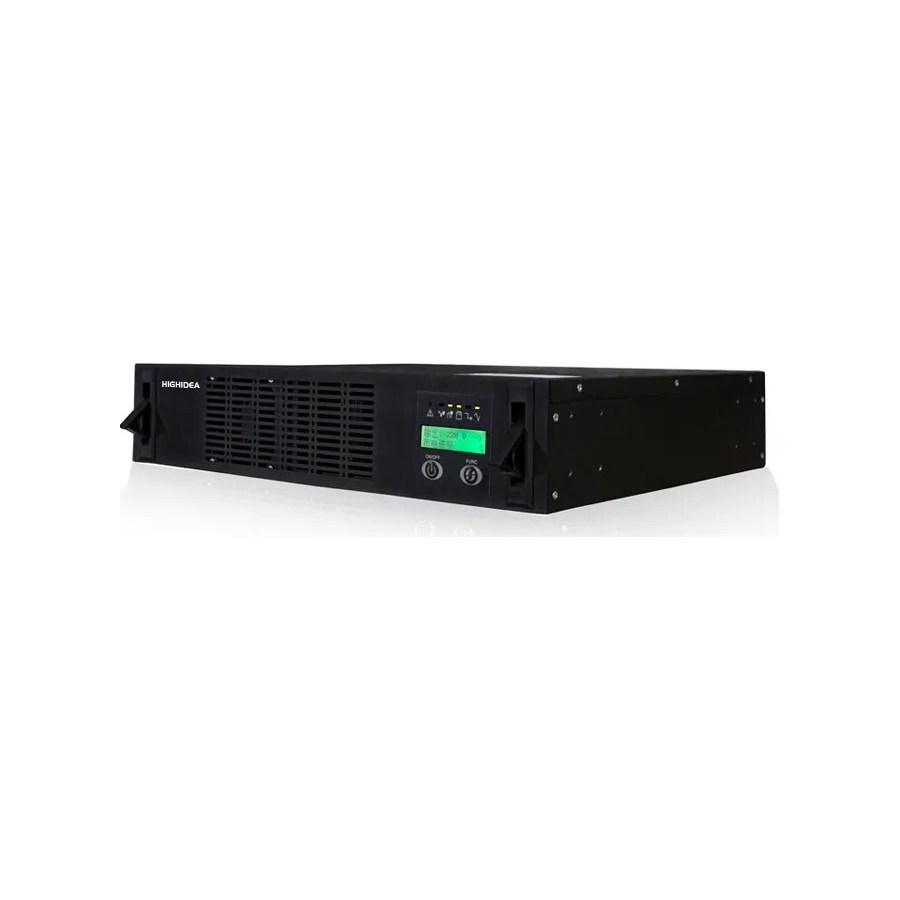 H Series 1-3kVA |
Online double-conversion DC-AC inverter (rack-mount) | Substations, power plants, telecom base stations, HVDC data rooms, NAS and control equipment | DC input voltage is fixed per order — 24, 48, 110, 220 or 240VDC |
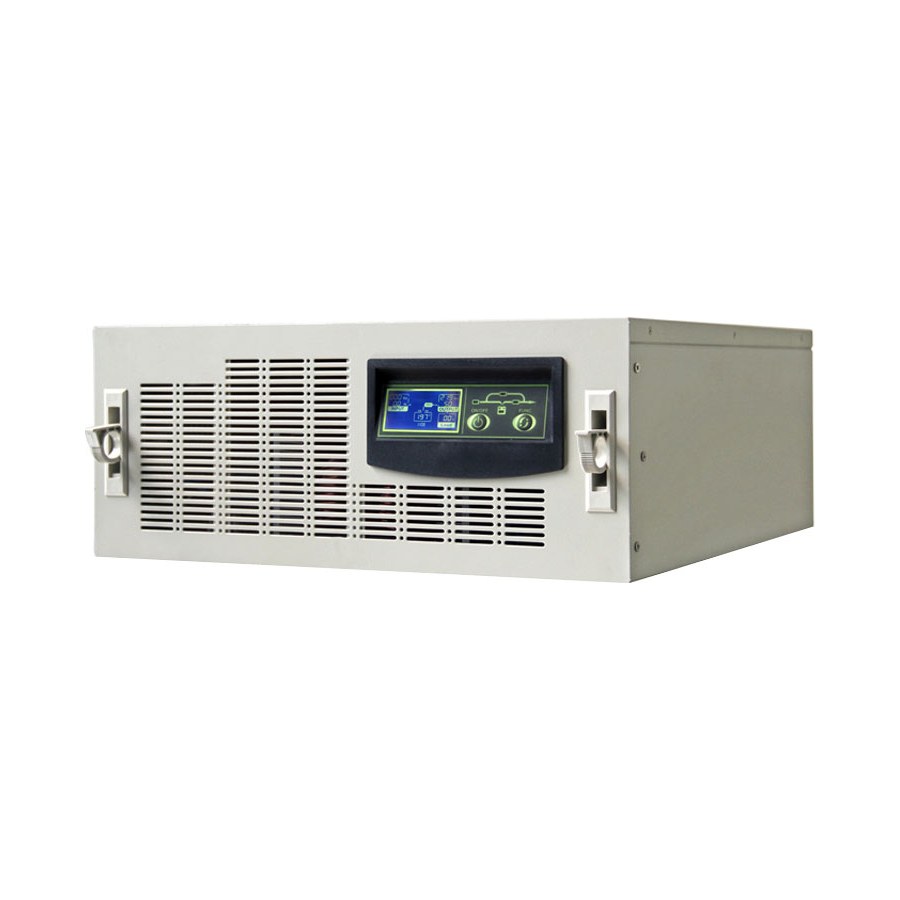 H Series 6-20k |
Online double-conversion DC-AC inverter with external isolation transformers | Power plants, HVDC equipment rooms, utility DC panels, integrated AC/DC power systems | External input and output power-frequency isolation transformers are specified separately |
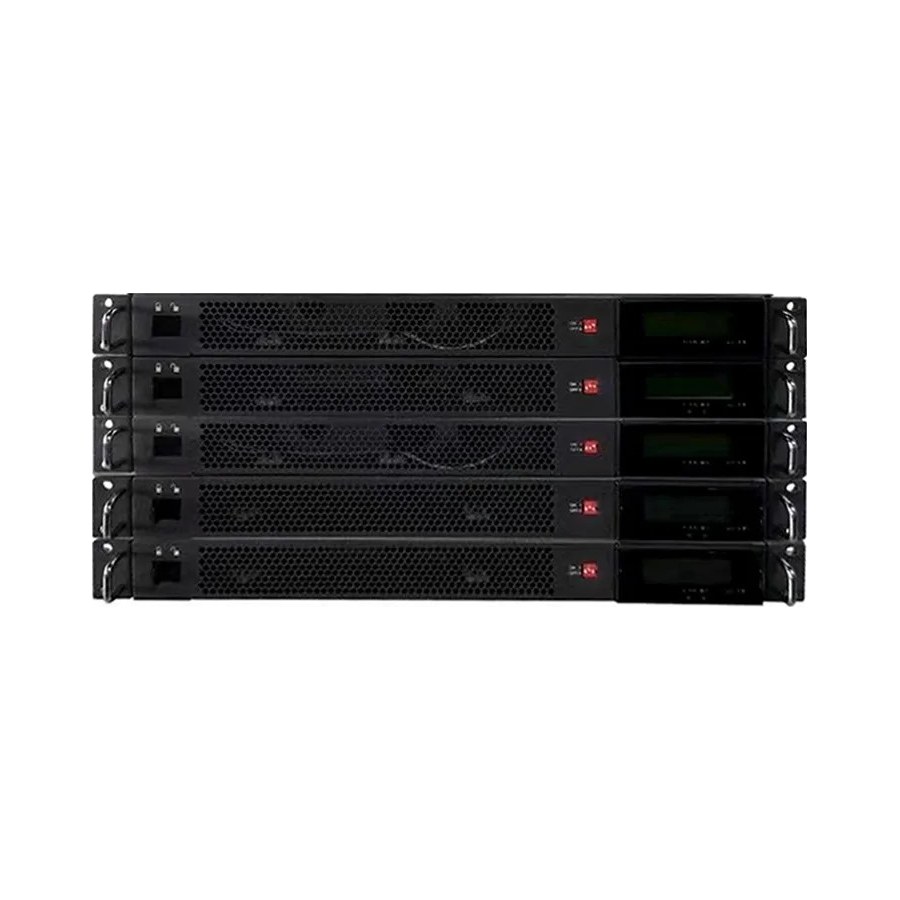 HM Series 3-15kVA |
Modular parallel DC-AC inverter (48VDC, 19-inch rack) | Telecom equipment rooms, modular IT rooms, industrial control, security systems, office backup | Standard configuration uses up to five 3kVA modules; battery bank is external |
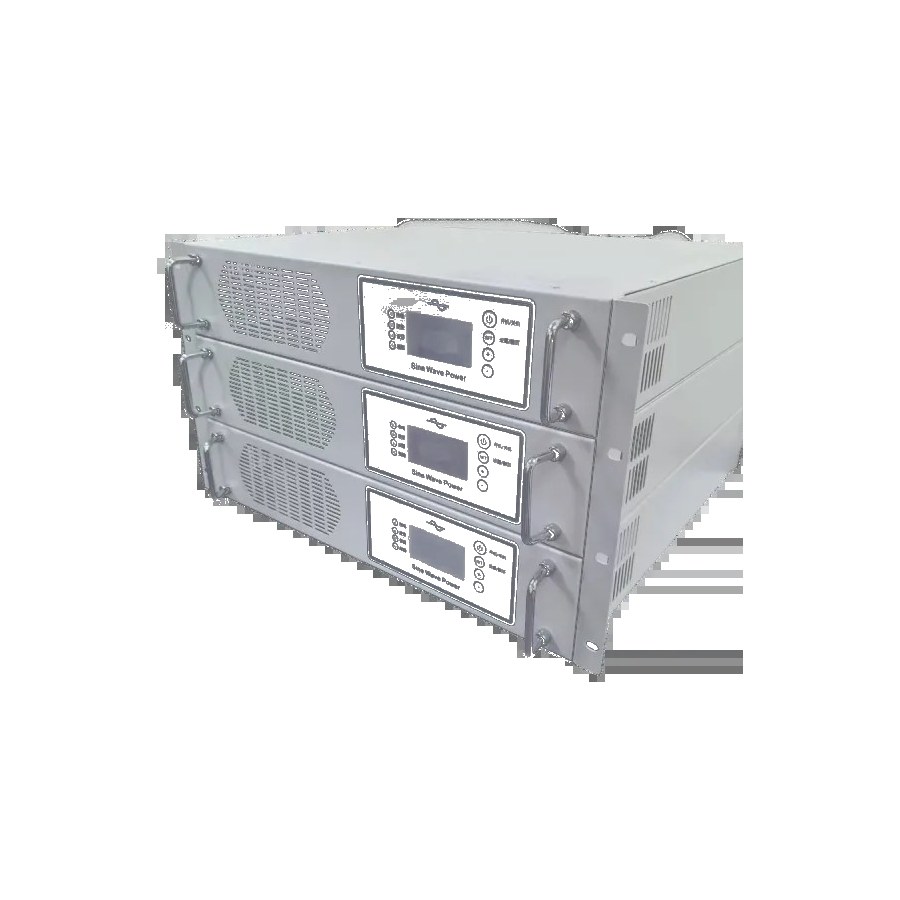 HP Series 6k |
CPU-controlled PWM DC-AC inverter (24 / 48VDC) | Telecom cabinets, equipment rooms, field and portable power installations | Available as a 19-inch rack unit or in a portable transport case |
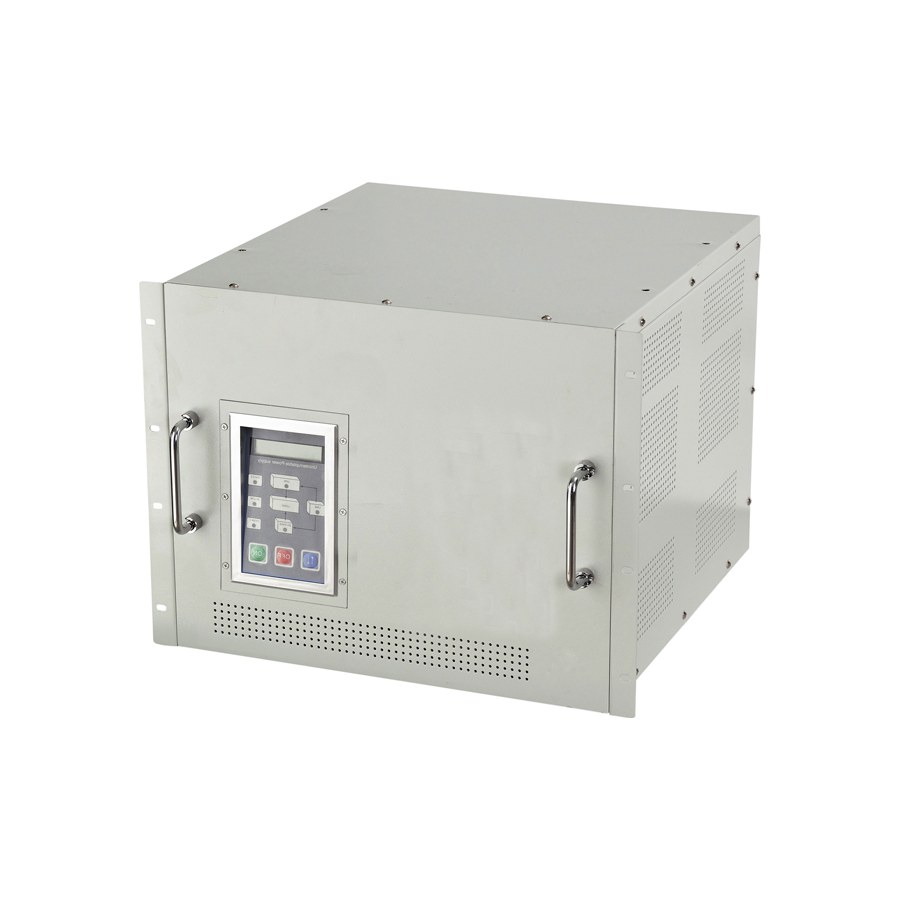 HT Series 1-20k |
Power-frequency online double-conversion inverter (rack-mount) | Power plants, substations, distribution rooms, power-line carrier, RTU and SCADA systems | Designed to operate from the station DC panel / battery bank; isolation transformer built in |
Models with links have detailed specification pages; unlisted models are also available on request. Capacity and quantity should be sized by our engineers against the actual load — never by nameplate rating alone.
Online DC-AC Inverters — frequently asked questions
What makes an online DC-AC inverter different from a standby one?
Which DC bus voltages are supported?
Why is AC/DC isolation so important on these sites?
Can these inverters run in parallel?
Do you supply batteries and monitoring?
Other Power & Telecom Inverters categories
Compare the alternatives within the same product line.