
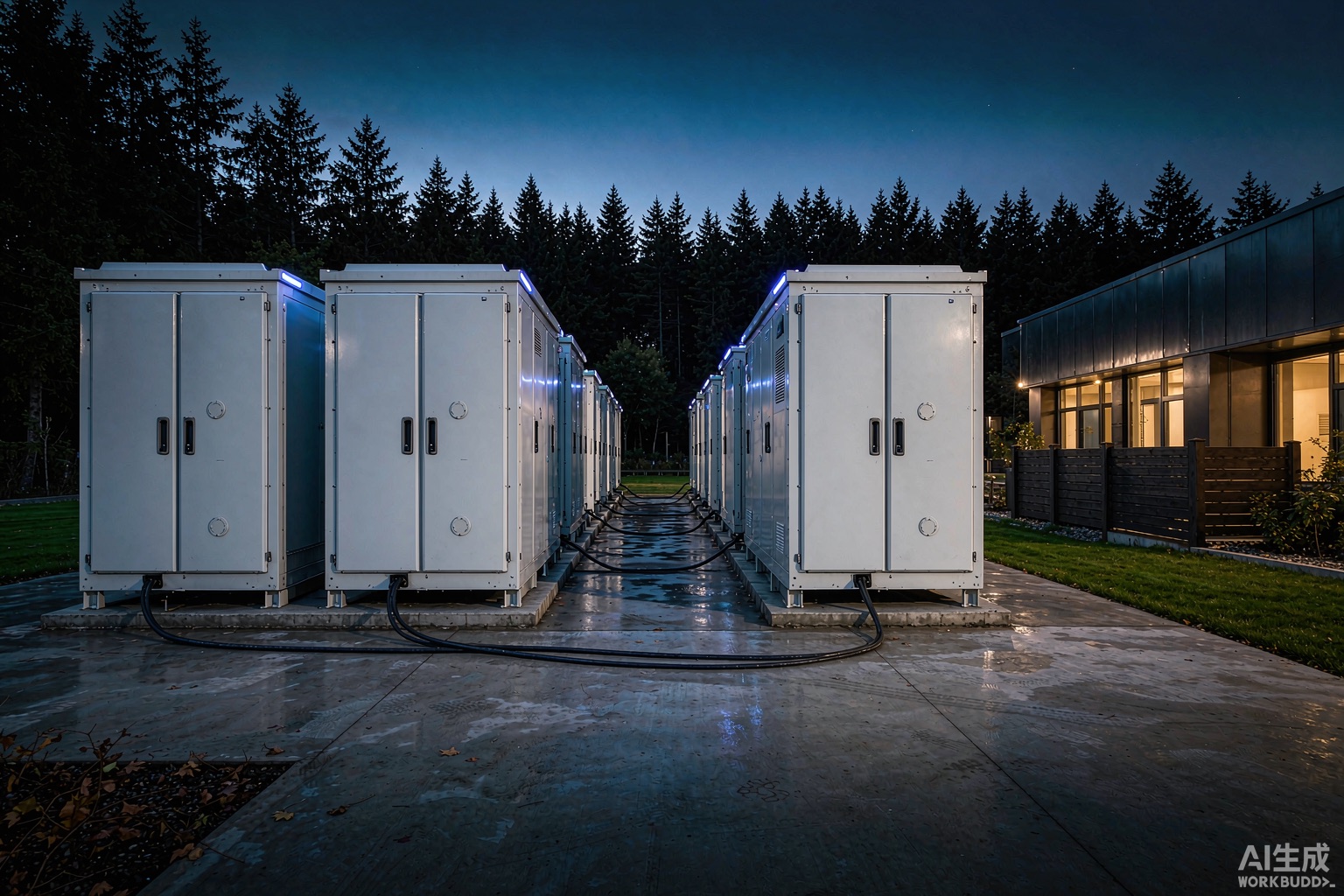
Energy Storage Systems & LiFePO4 Battery Packs
HighIdea builds the battery and the system around it — packs from 12 V to 800 V, home batteries from 5 kWh, commercial cabinets from 100 kWh and containerised BESS. All from our own Shenzhen production lines, with the inverter protocol loaded before the unit ships.
The battery is now the cheap part
What decides whether a storage project succeeds has moved. Cells are commodities; the engineering around them is not. Thermal design, BMS communication, enclosure consistency, protection coordination and the documentation that clears customs — those are where projects fail and where the money is actually made.
HighIdea is a factory, not a trading company. Every pack and every system on this site is built on our own Shenzhen lines, which is what allows a specification to be reproduced a year later rather than re-sourced.
The range
| Platform | Capacity | Where it fits |
|---|---|---|
| 12 V packs | 50–300 Ah | RV, marine, golf cart, off-grid — drop-in lead-acid replacement |
| 24 V packs | 50–300 Ah | Mobility drives, light industrial machines, 24 V inverter banks |
| 48 V packs | 10–280 Ah | UPS, telecom DC plants, hybrid solar — the industrial workhorse |
| High-voltage stacks | 100–800 V | Three-phase commercial inverters, container ESS, traction |
| Residential ESS | 5–30 kWh | Wall-mount and stackable home batteries |
| Commercial ESS | 100 kWh – MWh | Air- or liquid-cooled cabinets, containerised BESS |
| Rack & cabinet systems | 3U–4U modules | Integrators who want a module, not our enclosure |
| Portable power | 2–20 kWh | Site power, events, mobile offices, emergency supply |
OEM and ODM is the actual business
Most of what leaves this factory does not carry our name. Brand owners come to us with an inverter platform, an existing industrial design and a market requirement, and we deliver a product: enclosure design and tooling, BMS selection and firmware, inverter protocol matching, tested datasheet figures and the certification documentation the market requires.
What that means in practice:
- Frozen mechanical envelope. The mounting holes, depth and mass stay the same batch to batch, so your enclosure design, shipping carton and mounting jig stay valid. We publish changes in advance and support the old version alongside the new one for a defined period.
- Protocol loaded at the factory. We cannot test on your inverter, but we verify on the same model — shipping a battery that reports a communication fault on first power-up is a support cost nobody wants.
- Cell and module production stays in-house. Your specification is not dependent on a third-party assembler's process control.
See OEM / ODM for the ordering process, tooling and lead times.
Sizing, not selling
A battery specified for a duty cycle it never sees is money wasted; one specified below what it actually sees is a warranty claim waiting to happen. Two systems with the same nameplate capacity can need completely different batteries:
- A telecom backup pack sits at full charge for weeks and then discharges hard for four hours.
- A solar pack cycles between 20 % and 90 % state of charge every single day.
- A marine pack sits idle for months, then is asked for a high starting current in a damp, salt-laden environment.
The application guides set out the sizing logic for each case, and the knowledge base covers chemistry selection, pack sizing, BMS specification, certification and cycle-life planning in detail.
Send your load profile, required runtime, inverter or PCS and target market through the contact form and our engineers will return a recommended configuration with factory-direct pricing.
What to check before you commit
- Continuous versus peak current. The BMS rating sets what the pack can deliver, and it must cover the load's starting surge — not its running watts.
- Charge profile. LiFePO4 needs 14.2–14.6 V absorption per 12 V block, no equalisation and no desulfation. A lead-acid charger will shorten the pack's life.
- Charging below 0 °C. Charging LiFePO4 in freezing conditions causes permanent damage. If the market is cold, specify the low-temperature cut-off version.
- Depth of discharge. Cycle life is specified at a stated depth. A system that discharges to empty every day will not reach its rated cycle count, whatever the datasheet says.
- Documentation. UN38.3 and MSDS are not optional for lithium shipping, and the certificates have to name the finished product your customer is buying.
Certificates, test report numbers and shipping documents are listed on the Certifications page.