
16S smart BMS, 100 A with CAN and RS485
The board that decides whether a 51.2 V pack reaches its rated cycle life. Includes active balancing, the full protection set, and a documented register map so your controller can actually read it.
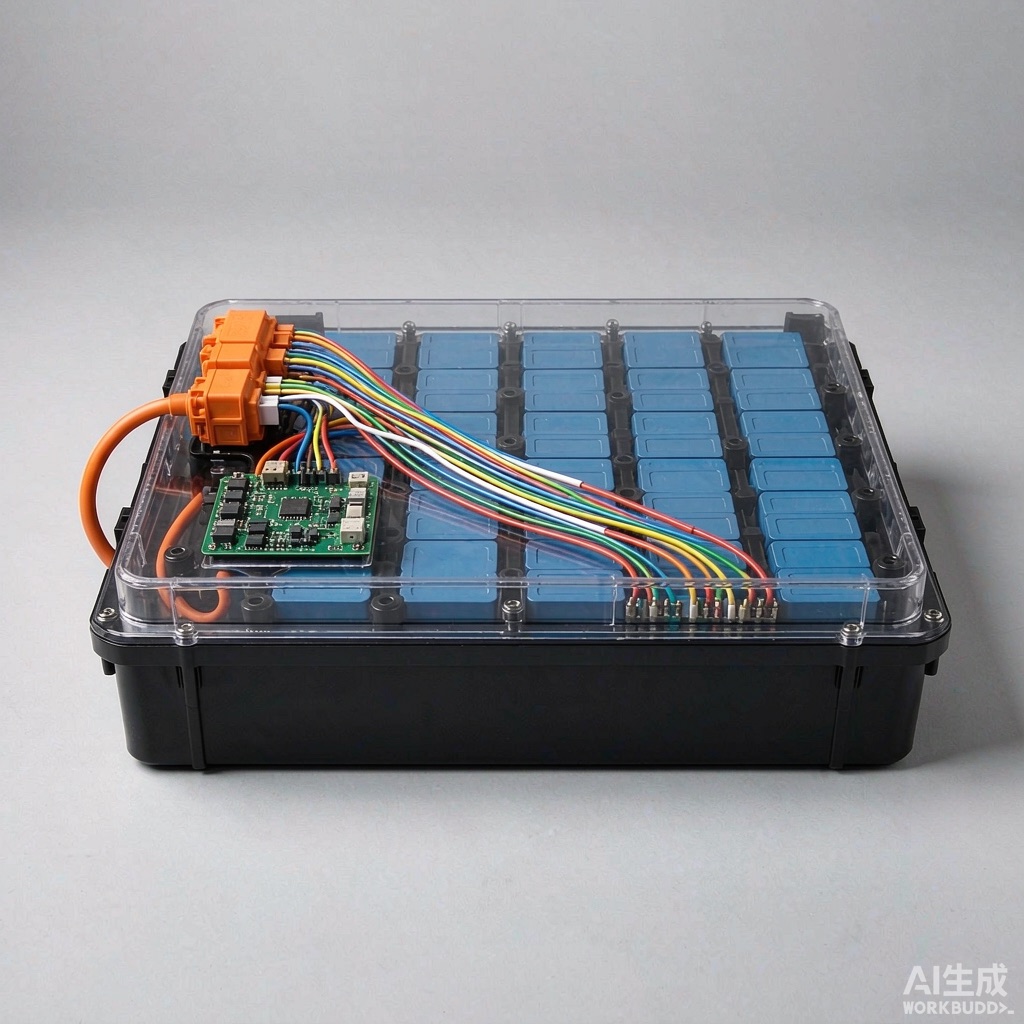 Product image
- Brand
- HighIdea
- Type
- Smart BMS, 16S, 100 A
- Typical applications
- 51.2 V LiFePO4 packs, telecom, solar, UPS replacement
- Models in range
- BMS-16S-100A standard 100 A, BMS-16S-200A 200 A variant, BMS-8S-100A 8S 25.6 V variant
- Category
- Accessories & BMS
The most misunderstood component in a pack
Buyers treat the BMS as a protective accessory. It is better understood as the pack's operating envelope: it sets the cut-offs, the current limits, the balancing behaviour, the temperature derating and the data the system controller sees.
Two packs built from the same cells with different BMS configurations are different products with different service lives. That is why we configure the board to the application rather than shipping a default.
Why the register map matters
An EMS cannot use a BMS it cannot read. Without a documented register map, every value has to be reverse-engineered from traffic, which takes weeks and breaks silently whenever the firmware changes.
We publish the map. It is the difference between an integration that takes two weeks and one that takes six, and between a product you can support and one where each firmware update is a risk.
Key Features
- 16S configuration for 51.2 V LiFePO4 packs
- 100 A continuous, 200 A peak for 10 seconds
- Active balancing above 1 A between cells
- Over/under-voltage, over-current, short circuit and temperature protection
- CAN, RS485 and Bluetooth communication
- Documented register map — no reverse engineering
- Configurable current limits, thresholds and protocol at the factory
Specifications
| Configuration | 16S LiFePO4 |
|---|---|
| Continuous current | 100 A |
| Peak current | 200 A for 10 s |
| Balancing | active |
| Over-voltage cut-off | 3.65 V per cell |
| Under-voltage cut-off | 2.50 V per cell |
| Temperature protection | charge 0 °C to +45 °C |
| Communication | CAN |
| Supply voltage | 51.2 V nominal |
| Dimensions | 180 × 110 × 25 mm |
| Warranty | 2 years |
Specifications subject to the latest factory data. Final configuration is sized against the actual load, backup runtime and site power conditions — this table is for pre-selection only.
Applications
Spare and replacement BMS
For service stock where a pack's original board has failed and the fault has been traced to the BMS rather than the cells.
Integrator pack build
For integrators assembling their own packs who want a documented interface rather than a black box.
Protocol retrofit
Where an existing pack needs to communicate with a new inverter using a protocol the original BMS does not support.
FAQ
Active or passive balancing — does it matter?
Can the current limits be changed after delivery?
What documentation comes with it?
Is it a drop-in replacement for common BMS boards?
Related Models
CHG-48-20
A charger with a genuine LiFePO4 profile — 58.4 V absorption, no equalisation, no temperature compensation — rather than a lead-acid charger with a lithium label.
View detailsLP24-200
5.12 kWh at 25.6 V with a 200 A continuous rating — for 24 V systems running 3,000–4,000 W inverters or machine drives that pull a sustained 150 A.
View detailsLP48-100
5.12 kWh at 51.2 V with a 16S BMS that speaks the protocol most hybrid inverters and telecom rectifiers expect — configured at the factory to your equipment.
View details