
CHG-48-20 48 V LiFePO4 charger, 20 A
A charger with a genuine LiFePO4 profile — 58.4 V absorption, no equalisation, no temperature compensation — rather than a lead-acid charger with a lithium label.
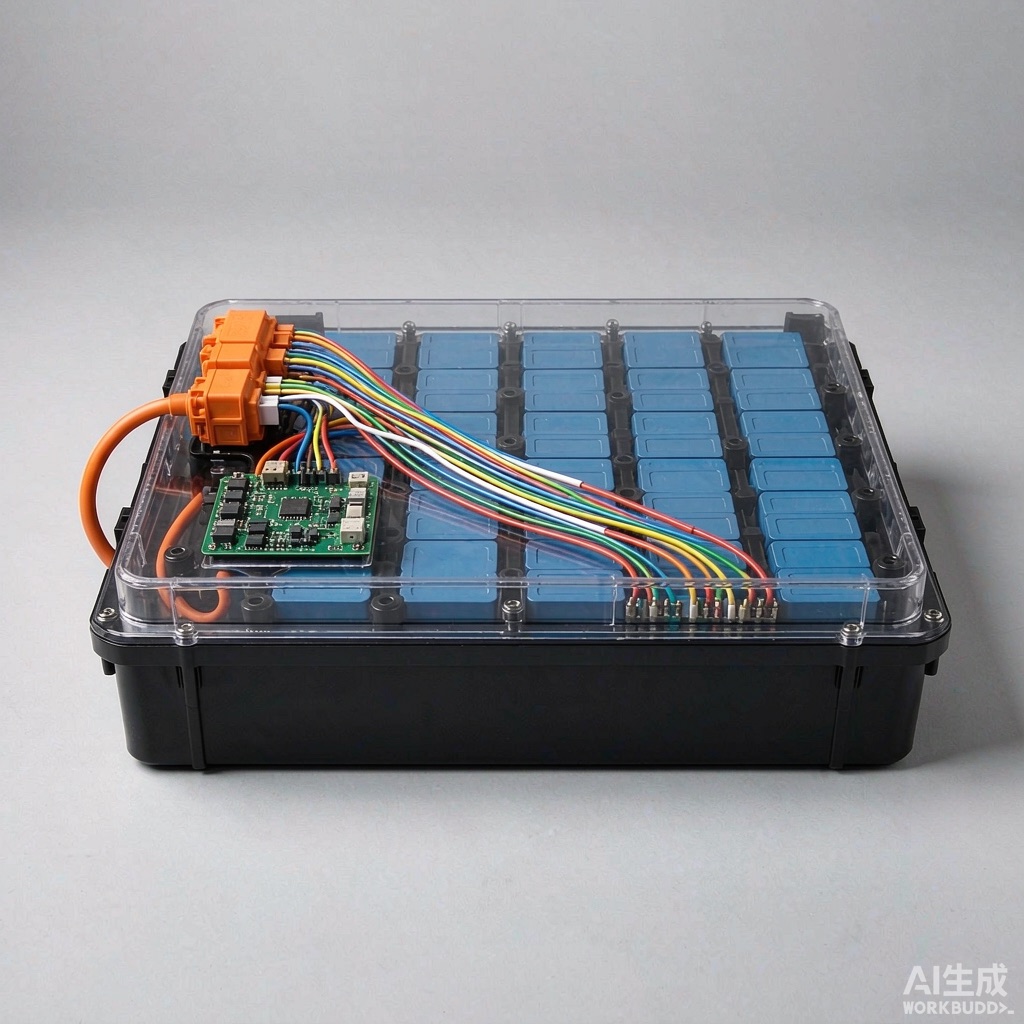 Product image
- Brand
- HighIdea
- Type
- CC/CV LiFePO4 charger, 48 V 20 A
- Typical applications
- Charging 51.2 V LiFePO4 packs, workshop and service use
- Models in range
- CHG-48-20 standard 20 A, CHG-48-30 30 A variant, CHG-48-20C with CAN communication
- Category
- Accessories & BMS
The charger is where cycle life is quietly lost
Three behaviours of a lead-acid charger damage a LiFePO4 pack, and none of them are obvious at the point of purchase:
- Equalisation or desulfation stages, which raise the voltage well above what LiFePO4 cells can accept.
- Continuous float at 13.6–13.8 V per 12 V section, which holds cells above their resting voltage indefinitely.
- Temperature compensation, which increases voltage in cold conditions — the opposite of what LiFePO4 requires.
A charger sold as "lithium compatible" may still include these stages. Check the profile, not the label.
Charging below freezing
Every LiFePO4 product in our range blocks charging below 0 °C, because charging at a lower temperature causes lithium plating, which is permanent and reduces capacity. Discharge is permitted to -20 °C.
For applications that must charge in cold conditions, the pack needs a low-temperature cut-off with heating, or the charger must be interlocked with the BMS. This is a system design decision, not a charger setting.
Key Features
- 58.4 V absorption, configurable per cell limits
- No equalisation stage and no temperature compensation
- Constant current then constant voltage charge with taper cut-off
- Optional CAN version that follows the BMS charge current limits
- Over-temperature, over-voltage and reverse polarity protection
- Fan cooled with an aluminium body
- 2-year warranty
Specifications
| Input voltage | 100–240 V AC |
|---|---|
| Output voltage | 58.4 V maximum |
| Output current | 20 A maximum |
| Charge profile | CC/CV with taper cut-off |
| Equalisation stage | none |
| Temperature compensation | none |
| Communication | optional CAN to BMS |
| Protection | over-temperature |
| Cooling | fan |
| Dimensions | 240 × 150 × 90 mm |
| Warranty | 2 years |
Specifications subject to the latest factory data. Final configuration is sized against the actual load, backup runtime and site power conditions — this table is for pre-selection only.
Applications
Workshop and service charging
A charger for the bench or the service van that will not damage a customer's pack through an unsuitable profile.
On-board charging for vehicles
Where the pack charges from a shore supply or a generator and the profile must be exact.
CAN-controlled charging
On installations where the BMS should govern the charge current, for example where charge current must be limited by cell temperature.
FAQ
Why is temperature compensation a problem?
What does the CAN version do differently?
Can I use it for a 12 V or 24 V pack?
Is it suitable for permanent installation in a vehicle?
Related Models
BMS-16S-100A
The board that decides whether a 51.2 V pack reaches its rated cycle life. Includes active balancing, the full protection set, and a documented register map so your controller can actually read it.
View detailsLP12-100
A drop-in replacement for a 100 Ah lead-acid battery that delivers roughly 90 Ah of usable energy instead of 50, at about one third of the weight.
View detailsLP48-100
5.12 kWh at 51.2 V with a 16S BMS that speaks the protocol most hybrid inverters and telecom rectifiers expect — configured at the factory to your equipment.
View details